Is Noorani Qaida necessary to learn Quran?
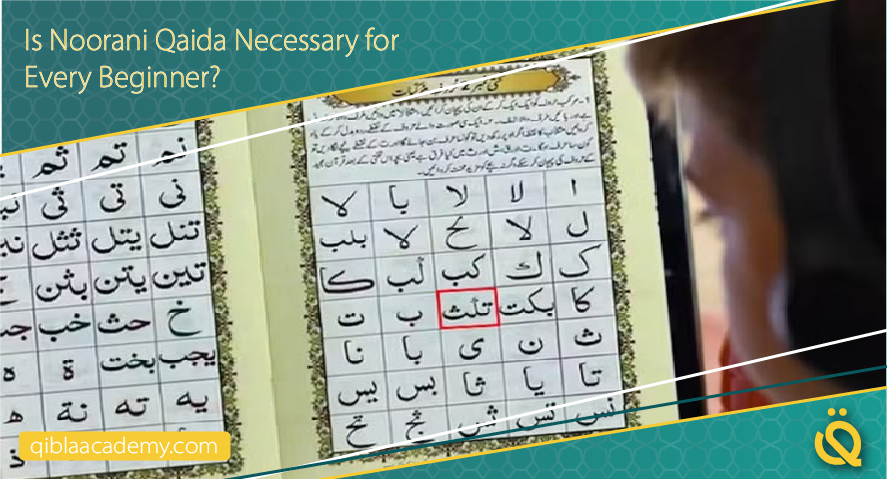
For many beginners, Noorani Qaida is a useful way to build Arabic-letter recognition, joined forms, vowel patterns, and early Quran-reading skills.
But not every learner needs to start from the first page or complete every exercise.
A complete beginner may benefit from the full Noorani Qaida sequence. A returning learner may need targeted review of one weak foundation, while someone who can already decode unfamiliar words may be ready for guided Quran reading instead.
The right decision depends on the learner’s actual reading ability—not age, confidence, memorized Surahs, or whether they previously completed a Qaida book.
This guide focuses on one question:
Does the learner need the complete Noorani Qaida path, targeted foundation review, or direct guided Quran reading?
Quick Answer: Is Noorani Qaida Necessary?
Noorani Qaida is useful when important Quran-reading foundations are still unstable, but it is not necessary for every learner to begin from the first page or complete the entire book.
A full Noorani Qaida path makes sense when the learner struggles broadly with:
- Arabic-letter recognition
- Joined letter forms
- Short vowels
- Sukoon and Shaddah
- Basic connected reading
- Decoding unfamiliar short words
Targeted Noorani Qaida review may be enough when only one or two foundation skills remain weak.
If the learner can already decode unfamiliar short Quranic words with reasonable accuracy, guided Quran reading may be the better next step.
Use this principle:
Choose the shortest learning path that repairs the learner’s actual reading gaps without skipping essential foundations.
For the complete Noorani Qaida curriculum and learning sequence, continue with the Noorani Qaida Online: Complete Beginner Guide.
For the wider Quran-learning roadmap, read the Complete Roadmap to Learn Quran Online.
If the learner cannot yet read Arabic script confidently, continue with How to Start Reading Quran When You Cannot Read Arabic.
What Is Noorani Qaida Designed to Teach?
Noorani Qaida is a graded foundation resource commonly used to introduce:
- Arabic letters and basic sounds
- Joined letter forms
- Short vowel marks
- Sukoon and Shaddah
- Basic Madd patterns
- Short-word decoding
- Early pronunciation correction
Its value comes from the sequence, practice, and correction—not from completing pages alone.
A learner may finish a section without being able to apply the same pattern in unfamiliar words. Another learner may demonstrate several Qaida skills without needing to repeat the complete book.
The correct question is not:
Has the learner finished Noorani Qaida?
Ask:
Which reading foundations can the learner apply independently, and which remain unstable?
A learner who completed Noorani Qaida years ago may still need review if joined forms or reading marks have been forgotten. However, the review should begin at the earliest weak skill rather than automatically restarting every page.
Likewise, a complete beginner may need a slower, more systematic path because several foundations must be built together.
The resource should support Quran reading. It should not become a goal separate from the ability to recognize, decode, and read unfamiliar material.
Noorani Qaida Decision Table
Use this table to identify the most suitable path.
| Learner Situation | Likely Need | Recommended Starting Point |
|---|---|---|
| Most Arabic letters are unfamiliar | Full foundation instruction | Begin near the start of Qaida |
| Letters are known but joined forms cause confusion | Focused foundation work | Begin at the relevant joining section |
| Vowel marks are frequently guessed | Targeted mark review | Review the unstable patterns |
| Familiar words are read but new words are guessed | Decoding practice | Use unfamiliar Qaida examples |
| Short unfamiliar words can be decoded | Guided reading may be suitable | Begin short Quranic passages with correction |
| Reading is possible but pronunciation errors repeat | Applied correction | Use guided recitation or Tajweed support |
| The book was completed before but skills were forgotten | Placement review | Restart only from the earliest unstable skill |
When two rows apply, begin with the earlier essential weakness.
A learner does not need to repeat every previous page simply because one later skill remains weak.
For example, a student who reads letters and joined forms accurately but confuses Shaddah may need targeted correction rather than a full restart.
Another learner may recognize familiar Qaida words because the pages were repeated many times. If unfamiliar words are still guessed, decoding practice should remain the priority.
The table provides an initial decision. A teacher should still confirm the starting point through unfamiliar letters, words, or short passages.
When Is a Full Noorani Qaida Path Useful?
A complete Qaida path is useful when several connected foundations remain unstable.
Choose the full path when the learner:
- Cannot recognize most Arabic letters
- Confuses many joined forms
- Regularly guesses vowel marks
- Cannot decode unfamiliar short words
- Needs a clear beginner sequence
- Has not yet developed a reliable reading process
A full path may be unnecessary when the learner:
- Recognizes letters and joined forms consistently
- Reads most basic marks accurately
- Has only one or two specific gaps
- Can decode unfamiliar short words
- Mainly needs fluency or pronunciation correction
- Can demonstrate the skill outside a memorized page
Use unfamiliar material before making the decision.
A learner who remembers one familiar Qaida page may still need foundation review. A learner who reads unfamiliar words accurately may not benefit from restarting the complete book.
The decision should also consider how the learner responds to correction.
A returning learner may make an error once, understand the explanation, and correct it consistently. This may require only brief review.
A complete beginner may need repeated modelling, shorter tasks, and more practice across several lessons before the same skill becomes stable.
The full path is appropriate when it creates structure. It is less useful when it repeats stable skills without solving the current reading problem.
Full Qaida, Targeted Review, or Guided Quran Reading?
| Option | Choose It When… | Main Purpose |
|---|---|---|
| Full Qaida path | Several foundational skills are unstable | Build the reading sequence from the beginning |
| Targeted Qaida review | One or two specific foundations are weak | Repair the exact reading gap |
| Guided Quran reading | The learner can decode unfamiliar short words | Transfer foundations into Quranic text |
| Applied Tajweed support | Reading is stable but pronunciation errors repeat | Correct recitation during real passages |
The options are not permanent labels.
A learner may begin with targeted review and move into guided reading. Another may attempt Quranic text and return briefly to one Qaida pattern when a specific weakness appears.
The goal is not to keep the learner inside one book. It is to build the ability needed for accurate Quran reading.
A mixed approach may also be appropriate.
For example, a learner may begin reading short Quranic phrases while reviewing Sukoon or Shaddah through selected Qaida exercises.
This works when one priority remains clear. The learner should not move randomly between several books, passages, and rules without understanding what each activity is meant to improve.
The shortest path is not always the easiest-looking path. It is the route that repairs the real weakness without unnecessary repetition or skipped foundations.
What Should a Useful Noorani Qaida Lesson Include?
A useful lesson should focus on one foundation and give the learner enough time to attempt, receive correction, and try again.
The lesson should include:
- Review of the previous skill
- One clear current target
- Teacher modelling
- Learner practice
- Focused correction
- A second attempt
- One unfamiliar example
- A specific practice task
The teacher should not only read while the learner listens.
The learner needs to identify letters, marks, or words independently so the actual difficulty becomes visible.
For example, if the target is joined forms, the student should attempt an unfamiliar short combination. If the target is Sukoon, the learner should read a new controlled example rather than repeat only the page used during the explanation.
The practice task should also match the lesson.
“Repeat the page” may be too broad. A clearer instruction might be:
Review these six words, focus on the Sukoon pattern, and be ready to read two new examples during the next lesson.
The teacher should then check the assigned skill before introducing another pattern.
For a full course and lesson structure, continue with What Happens in a Beginner Online Quran Course?
How Do You Know When to Move Forward?
Page completion does not automatically prove readiness.
Use three forms of evidence:
- Independence: Does the learner need less prompting?
- Transfer: Can the pattern be used in unfamiliar material?
- Retention: Is the skill remembered in a later lesson?
The learner may move to the next Qaida skill when the current pattern can be applied with less help.
The learner may begin short guided Quranic passages when they can:
- Recognize most relevant joined forms
- Read basic vowel marks
- Decode unfamiliar short words
- Avoid guessing familiar endings
- Repeat a correction accurately
- Maintain slow but controlled reading
Do not require perfect fluency before introducing Quranic text. However, do not move into full pages while most words still require guessing.
Use this rule:
Move forward because the skill transfers—not because the page was completed.
The first Quran passages should be short and manageable.
The learner may continue reviewing selected Qaida patterns while reading Quranic phrases. Moving forward does not require abandoning every foundation exercise.
Similarly, remaining on the same skill is not failure when independence, transfer, and retention are improving.
For a complete progress framework, continue with How to Measure Progress in an Online Quran Course.
Qaida Problem, Possible Cause, and Adjustment
| Learning Problem | Possible Cause | Practical Adjustment |
|---|---|---|
| Letters are repeatedly forgotten | Too many were introduced together | Use smaller groups and review |
| Joined forms remain confusing | Isolated recognition has not transferred | Match isolated and connected forms |
| Vowel marks are guessed | Patterns were introduced too quickly | Isolate one mark at a time |
| Familiar words are easy but new ones are difficult | Exercises were memorized | Add unfamiliar examples |
| Lessons feel repetitive without improvement | Practice is not testing transfer | Change the example, not only the page |
| Learner completes pages but cannot read Quranic text | Skills were not transferred | Add short guided Quran passages |
| Learner remains in Qaida despite stable decoding | Progress is measured by book completion | Move into guided reading |
| Pronunciation errors repeat despite accurate decoding | The main need has changed | Add focused recitation correction |
Identify the exact skill problem before restarting the complete book.
Change one factor at a time. Do not change the book, teacher, schedule, and level simultaneously unless there is clear evidence that all require replacement.
If the learner forgets letters, reduce the group size and add later review.
If familiar pages are easy but unfamiliar words remain difficult, change the examples before changing the complete resource.
If decoding is stable but pronunciation remains weak, the learner’s main need may have shifted from Qaida to guided recitation or Tajweed correction.
The adjustment should match the current problem, not the learner’s original starting label.
Common Noorani Qaida Mistakes
1. Starting Every Learner From Page One
Placement should reflect demonstrated skill, not the label “beginner.”
2. Measuring Progress Only by Completed Pages
The learner should apply the same pattern in unfamiliar words.
3. Repeating Without Explaining the Pattern
Repetition is stronger when the learner understands what to notice and reproduce.
4. Moving Into Quran Pages Too Early
Full pages may encourage guessing when letters, marks, or decoding remain unstable.
5. Staying in Qaida Too Long
A learner who can decode unfamiliar short words may need guided Quran reading rather than more repeated foundation pages.
How Qibla Academy Can Help With Noorani Qaida Placement
Use a trial lesson to determine whether the learner needs a full Qaida sequence, targeted review, guided Quran reading, or focused pronunciation correction.
Ask the teacher to:
- Use unfamiliar letters, words, or a short passage
- Identify the earliest unstable skill
- Explain whether a full Qaida path is necessary
- Recommend the correct starting section
- Show how correction will work
- Assign one focused practice task
- Explain when the learner may move forward
- Review the same skill later
The recommendation should reflect demonstrated ability rather than placing every learner at the beginning automatically.
A useful trial should explain why the recommended path is suitable.
For example, the teacher may recommend:
- Full Qaida because letters, joined forms, and marks are broadly unstable
- Targeted review because only Sukoon and Shaddah remain weak
- Guided reading because short unfamiliar words can already be decoded
- Applied pronunciation correction because reading is stable but repeated sounds remain inaccurate
The learner or parent should leave knowing what will be studied, why it comes first, and what evidence will show readiness to move forward.
You can compare Qibla Academy’s Quran Teachers and review the Current Class Plans before selecting regular lessons.
Choose the Right Qaida Starting Point
Attempt a short unfamiliar sample, receive correction, and ask whether you need full Qaida, targeted review, or guided reading.
Frequently Asked Questions
1. Is Noorani Qaida Necessary for Every Beginner?
No. It is useful when important reading foundations remain unstable. A learner who already recognizes letters, marks, and unfamiliar short words may need targeted review or guided reading instead.
2. Can Adults Learn With Noorani Qaida?
Yes. Adults can use Noorani Qaida, but the pace and starting section should reflect their demonstrated ability rather than age.
3. Should a Student Complete Every Noorani Qaida Page?
Not always. The learner should demonstrate the relevant skill in unfamiliar material. Repeating every page is unnecessary when the foundation is already stable.
4. How Do I Know When to Finish Noorani Qaida?
The learner may move beyond Qaida when they can recognize joined forms, read basic marks, decode unfamiliar short words, and retain correction with limited help.
5. Can a Student Read Quran While Still Studying Qaida?
Yes. Short guided Quranic passages may be introduced when they reinforce skills the learner is already practising without creating constant guessing.
Conclusion: Use Noorani Qaida to Build Skills, Not Complete Pages
Noorani Qaida is useful when it repairs real Quran-reading foundations.
A complete beginner may need the full sequence. A returning learner may need only one relevant section. A learner who can decode unfamiliar short words may be ready for guided Quran reading instead.
Do not decide according to age, previous book completion, or the number of memorized surahs.
Check whether the learner can:
- Recognize letters and joined forms
- Read basic marks
- Decode unfamiliar short words
- Apply patterns outside familiar pages
- Remember correction later
Use this decision rule:
Choose a full Qaida path when several foundations are weak. Choose targeted review when the gap is narrow. Move into guided Quran reading when decoding is stable enough to transfer.
The purpose of Noorani Qaida is to prepare the learner for Quranic reading—not to keep the learner inside the book longer than necessary.