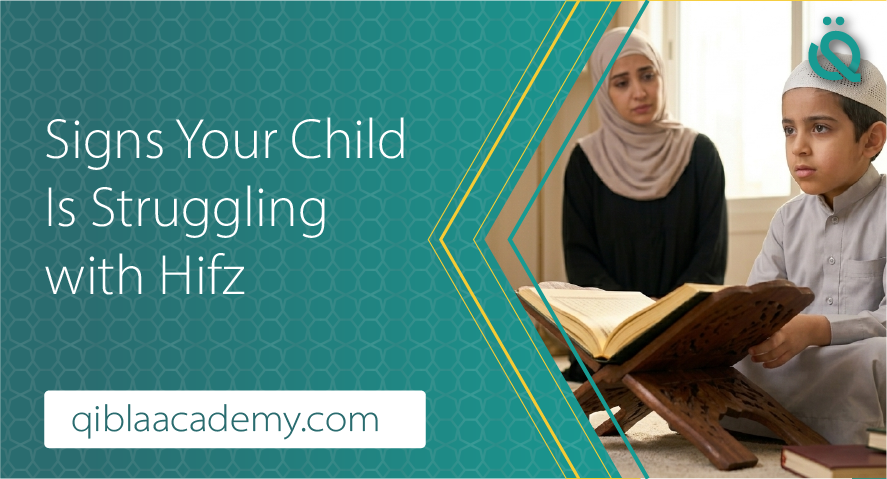
A child may not always say clearly that Quran memorization has become difficult.
Instead, parents may notice changes such as avoiding Quran time, forgetting recent lessons, becoming unusually anxious before recitation, or losing confidence in portions that were previously manageable.
One difficult session does not necessarily mean the child is experiencing Hifz burnout.
The important question is whether the same warning signs keep appearing and whether they represent a clear change from the child’s usual behaviour.
Quick Answer: What Are the Signs Your Child Is Struggling with Hifz?
Common signs include:
- Delaying or avoiding Quran sessions
- Crying, irritability, or visible tension before Hifz
- Repeatedly forgetting recently memorized verses
- Taking much longer to complete the same portion
- Losing confidence during recitation
- Complaining of tiredness or discomfort mainly around lesson time
- Resisting correction even after the workload is reduced
- Showing less interest in Quran activities that were previously enjoyable
If several signs continue across multiple sessions, pause before increasing the memorization target.
First check whether the main problem is:
- An unrealistic daily workload
- Weak Muraja’ah
- School fatigue
- Correction style
- Teacher fit
- Unstable Quran-reading foundations
The aim is not to diagnose the child from one checklist.
It is to recognize repeated patterns early and adjust the learning plan before frustration becomes stronger resistance.
For the complete Hifz roadmap, read the Complete Guide to Quran Hifz for Kids.
For practical ways to improve the home learning environment, continue with How Parents Can Help Children Memorize Quran at Home.
This guide explains the behavioural, emotional, and recitation signs parents should notice—and what to do next.
Behavioral Signs: How Your Child Procrastinates

Before a child completely stops memorizing, they will often try to delay the process. Understanding these behavioral changes helps you identify resistance before it turns into a permanent roadblock.
Early Signs Your Child Is Struggling with Hifz at Home
If your child used to enjoy their Quran time but suddenly shows anxiety or dread when the Mushaf is opened, this is an immediate red flag. A child who is thriving looks forward to the routine; a child who is drowning feels cornered and will begin displaying clear signs of procrastination.
Creative Excuses to Avoid Quran Time
Are you noticing a sudden rise in complaints right before their scheduled Hifz session? If your child suddenly needs a drink of water every five minutes, complains of a minor stomach ache, or spends twenty minutes searching for their favorite pencil, they aren’t just being difficult. They are using avoidance tactics because the pressure has become too high.
Increasing Emotional Meltdowns
When a child feels incapable of meeting your expectations or their teacher’s goals, their frustration manifests as emotional outbursts. Crying over a missed verse or slamming the Mushaf shut are loud cries for help.
Case Study: Zain’s Journey Past Burnout
To see how these behavioral signs manifest, consider the story of Zain, an eight-year-old boy living with his family in the UK. Zain had successfully memorized two Juz, but when he reached the longer Surahs of the third Juz, his daily routine became a struggle. He started complaining of severe headaches every evening right before his online Quran class, and his mood shifted from cheerful to highly irritable.
His mother initially thought he was just being lazy. However, after tracking his behavior, she realized these symptoms only appeared on days when his Sabaq (new lesson) was longer than half a page. Zain was experiencing cognitive burnout. By pausing his new lessons for two weeks and shifting entirely to encouraging, gamified revision sessions, his anxiety disappeared, his headaches stopped, and he returned to his Hifz with renewed love and energy.
Expert Pedagogical Note: While occasional frustration is normal during Quran memorization, persistent emotional distress, avoidance behaviors, or physical complaints may indicate that a child’s learning plan needs adjustment.
Hifz Distress Checklist: Psychological vs. Academic Flags
To help you distinguish between a temporary bad day and a deeper struggle, use this comprehensive checklist to monitor your child’s behavior over a two-week period:
| Type of Warning Sign | Academic Red Flag | Psychological / Physical Red Flag |
| Early Stage | Spending double the time on the same Ayah | Frequent sighing, yawning, and general distraction |
| Developing Stage | Forgetting yesterday’s Sabaq completely | Complaints of headaches or stomach aches before class |
| Advanced Stage | Constant mixing of basic verses (Mutashabihat) | Crying, extreme irritability, or silent withdrawal |
Action Plan: Severity Levels and Parent Response
Identifying the signs is only half the battle; knowing exactly how to react to each stage prevents a mild struggle from becoming permanent burnout. Use this actionable breakdown to guide your immediate next steps:
| Warning Level | What Parents Should Do |
| Mild Resistance | Reduce Sabaq for 3 days and increase praise |
| Moderate Struggle | Pause new memorization and focus entirely on Muraja’ah |
| Severe Burnout | Seek professional teacher evaluation and redesign the Hifz plan |
Cognitive and Academic Red Flags in the Classroom
Sometimes the signs aren’t just emotional; they show up directly in how your child’s brain processes the verses during their daily routine.
Protracting the Same Portion for Days
If your child used to memorize a few lines in fifteen minutes but now sits for an hour over the exact same verse without making progress, their brain is resisting. This mental block usually means the current memorization load is too heavy.
The Breakdown of the Muraja’ah Framework

As we highlighted when outlining the Daily Hifz Routine for Kids, a functional schedule requires a critical balance between Sabaq, Sabqi, and Manzil. When a child is struggling, you will notice their Sabqi (recent memorization from the last 7 days) starts breaking down completely. If they cannot retain what they memorized 48 hours ago, moving forward with new verses will only compound the trauma. This structural collapse is often the main reason Why Kids Forget Quran Quickly, leading to a frustrating loop of re-memorization.
Chronic Hesitation and Confusion
A child who is struggling will constantly stumble on the vowels (Tashkeel) or drop the ends of verses completely, even in Surahs they have reviewed multiple times. This shows that their baseline focus is fractured due to stress or fatigue.
Actionable Solutions: How Mothers Can Lower the Pressure
If you have checked off multiple signs from the lists above, do not panic. Your role now shifts from a supervisor to a safe haven. Here is how you can gently steer the journey back on track:
How to Help a Child Struggling with Hifz
When trying to ease the burden on your child, implementing practical, immediate adjustments can rapidly reverse the early stages of burnout.
- Implement the “Halve the Load” Rule: If your child is struggling with four lines a day, cut it down to two lines—or even one. The goal is to rebuild their confidence. Achieving a small goal perfectly feels much better to a child’s brain than failing a large goal daily.
- Transition into Shared Recitation: When a child feels isolated in their struggle, sit with them and read together. Read one word, and let them read the next, or read the verse fully and have them echo it back. Turning Hifz into a bonding moment with you completely changes the emotional climate of the session.
- Optimize the Daily Environment: Ensure they are studying when their mind is freshest and free from digital distractions. Rebalancing their energy prevents early mental exhaustion.
When Home Support Is No Longer Enough
Many parents can identify the symptoms but struggle to determine the root cause. Is the issue retention, workload, school pressure, teaching style, or motivation? A structured Hifz assessment often helps uncover the real problem before it develops into long-term resistance.
As a mother, you try your best to manage everything at home, but there comes a point where DIY adjustments may not resolve deep-seated struggles.
Signs Your Child May Need Structured Hifz Guidance
If you notice the following indicators, it means the situation requires an external, structured pedagogical system rather than just changing the routine at home:
- Persistence Beyond Two Weeks: The emotional resistance and academic block continue even after cutting the workload in half.
- Complete Systemic Collapse: Both Sabqi and Manzil break down entirely, and your child cannot remember even their favorite, older Surahs.
- Refusal Despite Reduced Load: Your child continues to cry or exhibit physical symptoms like headaches even when asked to revise just a single line.
- Loss of Academic Self-Esteem: Your child starts voicing statements like “I am bad at this” or “I will never be able to memorize Quran,” indicating their confidence is broken.
Why Structured Hifz Programs Work
Structured Hifz programs combine personalized pacing, continuous Muraja’ah tracking, teacher accountability, and emotional support. Instead of guessing what is wrong, parents receive a clear roadmap tailored to their child’s learning style and progress level. This structured environment effectively relieves parental stress while healing the child’s academic anxiety through clear value-driven pillars:
- Personalized memorization pace: Adapting the daily load to fit the child’s current psychological and cognitive capacity.
- Daily Muraja’ah tracking: Ensuring that older and recent memorization pathways are stabilized before pushing forward.
- Experienced Hifz teachers: Professionals specifically trained to identify early signs of burnout and pivot the teaching style accordingly.
- Regular progress reports for parents: Providing actionable data and clear communication so you are always aware of your child’s milestones.
Is Your Child a Good Candidate for a Structured Hifz Program?
Every child responds differently to home environments. Sometimes, an external structure provides the precise boundaries and relief a child needs to stop seeing Hifz as a chore. Review the checklist below to see where your child currently stands:
- [ ] Frequently forgets recent memorization or mixes up similar verses.
- [ ] Needs constant, exhausting reminders from parents to attend or start sessions.
- [ ] Becomes visibly anxious, frustrated, or tearful before recitation.
- [ ] Struggles to balance school homework, activities, and daily Hifz.
- [ ] Has no consistent, independent Muraja’ah system in place.
If you checked three or more items, your child may benefit from a structured Hifz environment with professional guidance and gentle accountability.
Quick Parent Self-Assessment
To help you clarify the situation immediately, take a moment to answer “Yes” or “No” to the following questions:
- Does your child regularly forget lessons memorized within the last week?
- Do Quran sessions frequently end with frustration or tears?
- Does your child resist attending Hifz classes?
- Have you reduced the workload but seen little improvement?
- Do you feel unsure whether the problem is motivation, retention, or teaching style?
If you answered “Yes” to three or more questions, a structured Hifz evaluation may help identify the root cause and create a personalized recovery plan.
How Long Does Recovery Usually Take?
When facing these challenges, it is natural to feel anxious about the timeline. Most children begin showing positive emotional and academic improvement within 2 to 6 weeks after reducing pressure and implementing a structured review system. The exact timeline depends entirely on the severity of the initial burnout, the consistency of support, and how quickly the underlying stress factors are adjusted.
If you are unsure whether your child is experiencing normal learning fatigue or genuine Hifz burnout, a professional assessment can provide clarity. Many parents discover that a small adjustment in workload, revision structure, or teaching approach makes a dramatic difference in just a few weeks.
Progress Trackers: Signs Your Child Is Rebounding
Once you make these adjustments or integrate proper support, you need to know if the pressure is lifting. Use this table to measure their emotional and academic recovery:
| Positive Rebound Sign | What It Means |
| Voluntarily Opening the Mushaf | The psychological barrier and dread are melting away |
| Laughing / Smiling During Hifz | The brain is releasing dopamine, associating Quran with safety |
| Quick Sabaq Completion | Mental clarity is returning as cognitive load normalizes |
| Re-establishing Sabqi Stability | Short-term memory pathways are successfully healing |
Quick Summary for Busy Parents
If you are balancing a hectic schedule, use this executive summary to quickly audit your child’s current state and determine the best immediate next step:
| If You Notice | Your Next Step |
| Frequent forgetting | Increase Muraja’ah and reduce new lessons |
| Crying before Hifz | Investigate emotional pressure and praise efforts |
| Headaches or avoidance | Pause Sabaq temporarily to give the brain rest |
| No improvement after 2–6 weeks | Seek professional structured Hifz support |
| Loss of confidence | Focus on heavy encouragement and very small wins |
When Should Parents Seek Professional Hifz Support?
While many Hifz challenges can be resolved through better routines, reduced pressure, and stronger Muraja’ah systems, some situations require specialized guidance. Consider seeking professional support if:
- Your child continues struggling for more than 4–6 weeks despite consistent adjustments at home.
- Daily Hifz sessions regularly end in tears, frustration, or complete refusal to open the Mushaf.
- Memorization progress has completely stalled out entirely despite reducing the workload significantly.
- Your child has started losing confidence in their ability, voicing thoughts like “I will never be able to memorize Quran.”
- Family tension around Hifz is increasing and negatively affecting the emotional environment of the home.
A qualified Hifz mentor can often identify hidden pedagogical or retention obstacles that are difficult for parents to recognize on their own, helping children regain confidence and rebuild a healthy, loving relationship with the Quran.
Frequently Asked Questions About Hifz Struggles
Here are the most pressing questions mothers ask when trying to navigate their child’s academic or emotional struggles during Hifz.
My child is crying during Quran time. Should I make them push through?
No. Forcing a crying child to continue memorizing associates the words of Allah with emotional trauma. Pause the session immediately, comfort your child, and investigate whether the struggle is due to a harsh teaching style, exhaustion, or an unrealistic daily target.
How can I tell the difference between laziness and genuine struggle?
Laziness usually disappears when an exciting reward or game is introduced. A genuine struggle, however, persists even when incentives are offered. If your child wants the reward but physically or mentally cannot retain the verses despite trying, they are struggling, not lazy.
Should I change teachers if my child is constantly stressed?
If the stress is caused by a teacher’s overly strict tone, lack of patience, or unrealistic demands, then yes. A child’s Hifz teacher should be a source of inspiration and safety. If you live in areas like USA or Australia with limited local options, switching to a patient online instructor can make a world of difference.
Can a long break make my child forget everything they memorized?
A complete break where the Quran is entirely abandoned can weaken past memory. Instead of a total break, take a “Sabaq Break.” Stop all new memorization completely for 1 to 2 weeks, and focus solely on light, easy, and praised revision of their favorite past Surahs.
How does school stress impact their Quran memorization?
Extremely heavily. During exam seasons or periods of heavy school homework, your child’s cognitive capacity is stretched to its limit. During these weeks, it is highly recommended to lower their Hifz expectations significantly to prevent total burnout.
How do I know if my child needs professional Hifz support?
If your child continues struggling despite reducing the workload, improving the schedule, and increasing revision for several weeks, it may be time for a professional assessment. An experienced Hifz teacher can often identify specific structural, retention, or pedagogical problems that are difficult for parents to spot accurately at home.
What’s Next in Your Child’s Hifz Journey?
Identifying the precise reasons and signs your child is struggling with Hifz is a massive victory in itself—it means you are paying attention. However, many of the struggles children face actually stem from the unconscious pressure we place on them as parents.
Once you recognize the warning signs, the next step is checking whether the home routine itself is contributing to the problem. Review the common Hifz mistakes parents make to identify problems with daily workload, revision, comparison, correction style, and pressure—and see what to change instead.
Many parents spend months trying different routines before discovering that the issue was not motivation at all—it was structure. If your child is showing multiple signs of Hifz burnout, do not wait until frustration turns into complete resistance. A structured Hifz assessment can identify the root cause, create a personalized recovery plan, and help your child rebuild confidence before valuable progress is lost.
Explore our comprehensive Online Quran Memorization Course for Kids and discover how expert guidance, structured Muraja’ah systems, and supportive teachers can help your child move forward with confidence and joy. Remember, dear mother, your child’s relationship with the Quran is a lifelong bond. Protecting their love for the book of Allah is far more important than the speed at which they memorize it. Keep leading with love!