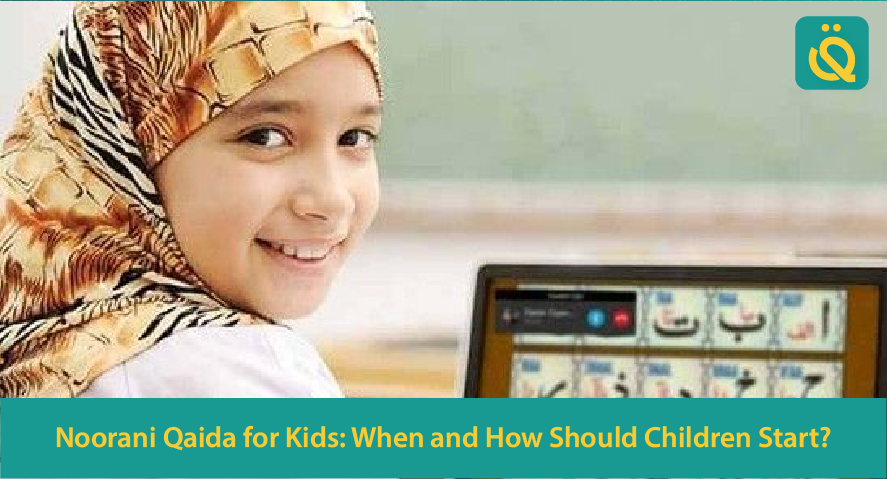
Noorani Qaida for kids provides a structured way to move from Arabic letters to connected forms, vowel patterns, and early Quran reading.
But starting well matters more than starting early.
One child may be ready to listen, imitate sounds, recognize simple patterns, and follow a short lesson. Another child of the same age may need more time with individual letters or shorter learning tasks.
The goal is not to finish the Qaida quickly.
It is to build a reading foundation that the child can remember and use later in Quranic text.
This guide focuses on three parent questions:
Is my child ready for Noorani Qaida, where should they start, and how can I tell whether the learning is working?
When Should Kids Start Noorani Qaida?
There is no single starting age for every child.
A child may be ready for simple Noorani Qaida lessons when they can:
- Listen to a short sound and repeat it
- Begin recognizing Arabic letters or patterns
- Stay engaged for a short learning task
- Accept simple correction
- Remember some material from one session to the next
For some children, this may happen during preschool or early primary-school years. Others may start later and progress well.
A better question than:
“Is my child old enough?”
is:
“Can my child engage with the pattern, attempt it, and gradually remember it?”
If yes, Noorani Qaida may be an appropriate starting method.
For the complete curriculum and broader learning sequence, continue with Noorani Qaida Online: Complete Beginner Guide.
What Is Noorani Qaida for Kids?
Noorani Qaida for kids teaches foundational patterns used before increasingly independent Quran reading.
Children may gradually work with:
- Arabic letters
- Connected letter forms
- Fathah, Kasrah, and Dammah
- Tanween
- Sukoon
- Shaddah
- Basic Madd
- Short connected combinations
The key word is gradually.
A child does not need to memorize every technical term before using the pattern.
Seeing, hearing, repeating, and reading may come first. Terminology can be added when it helps the child understand the lesson.
The complete Qaida curriculum belongs in the main Noorani Qaida guide. Here, the important question is where the individual child should begin.
Where Should a Child Start Noorani Qaida?
The starting point should depend on what the child can already recognize and read.
| Child’s Current Level | Possible Starting Point |
|---|---|
| Does not recognize Arabic letters | Begin with individual letters |
| Recognizes some letters | Strengthen recognition and similar shapes |
| Knows letters but struggles when they join | Connected forms and blending |
| Reads basic vowel patterns | Move to more complex combinations |
| Already reads simple Quranic words | Assess whether full Qaida is necessary |
A complete beginner does not need to know the Arabic alphabet perfectly before starting Noorani Qaida.
The method itself may teach those foundations.
But Noorani Qaida for kids should not automatically mean page one.
If a child already has stable reading skills, a short assessment may identify only the gaps that need attention.
For the wider necessity decision, continue with Is Noorani Qaida Necessary to Learn Quran?
How Does Age Affect Noorani Qaida Lessons for Kids?
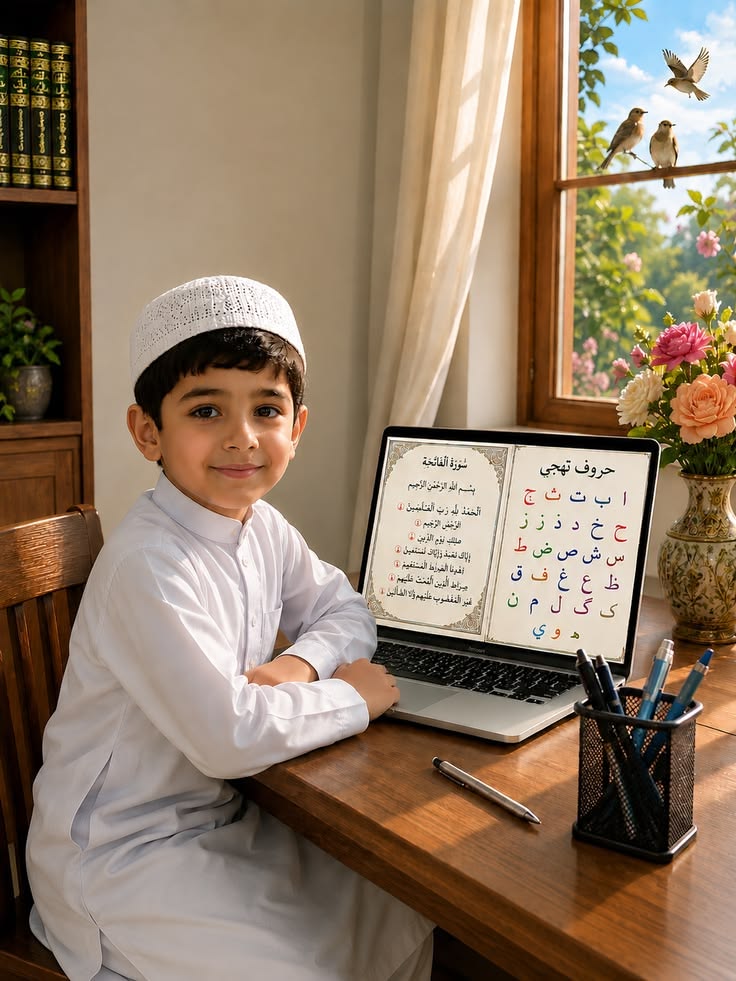
Age can guide lesson expectations, but it should not become a rigid placement rule.
A younger child may need:
- Shorter lessons
- More repetition
- Clear visual examples
- Fewer new patterns
- Frequent encouragement
An older beginner may be able to:
- Follow explanations more easily
- Compare similar patterns
- Practise briefly between lessons
- Move through familiar material faster
Neither child is automatically ahead.
For Noorani Qaida for kids, demonstrated reading ability and readiness matter more than age alone.
The purpose of considering age is to adjust how the lesson is taught, not to decide that every child of a particular age must begin at the same place.
How Should Noorani Qaida Lessons for Kids Begin?
The first lessons should remain simple.
A useful sequence is:
Hear → recognize → repeat → read → try again
For a new pattern, the teacher may:
- Show it.
- Pronounce it clearly.
- Let the child repeat.
- Mix it with familiar material.
- Correct one important mistake.
- Ask for another attempt.
- Test the same pattern in a new example.
That final step matters.
A child may memorize one row of a Qaida page without being able to recognize the same pattern elsewhere.
A new example helps distinguish memory from actual reading.
How Long Should Noorani Qaida Lessons for Kids Be?
There is no universal lesson length.
The right duration depends on:
- Age
- Attention
- Reading level
- Current difficulty
- Lesson frequency
- Whether the child is still responding accurately
A shorter focused lesson may be more useful than a longer session that ends in guessing and lost attention.
Parents should watch the quality of participation rather than minutes alone.
For detailed schedules, lesson formats, teacher selection, safety, and trial lessons, continue with the Online Quran Classes for Kids: Parent’s Guide.
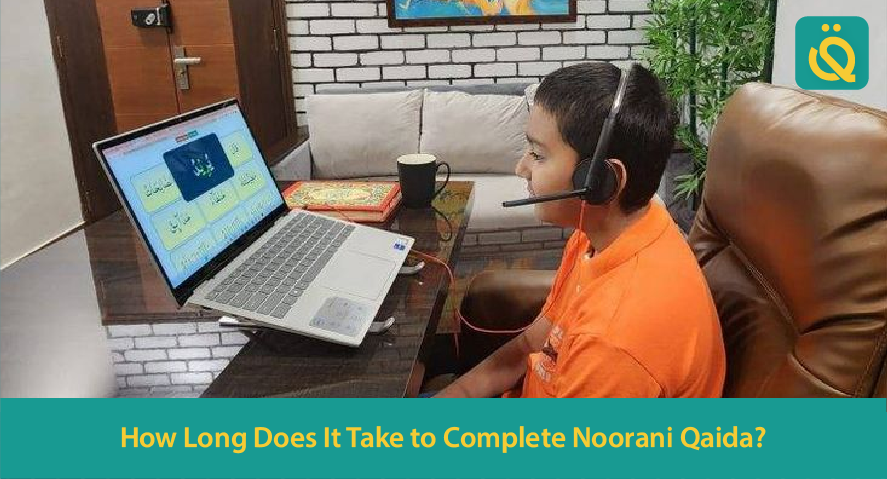
Can Kids Learn Noorani Qaida Online?
Yes, when the lesson remains interactive.
Online Noorani Qaida for kids should include:
- Teacher modelling
- Child reading aloud
- Immediate correction
- Another attempt
- New examples
- Short review of earlier skills
The child should not spend the lesson silently watching a screen.
The teacher needs to hear enough reading to know whether the pattern is genuinely understood.
Online delivery changes where the lesson happens.
It should not remove live reading and correction.
How Do You Know Your Child Is Progressing in Noorani Qaida?
Page completion is not enough.
Look for signs such as:
- Less hesitation with the current pattern
- More accurate reading
- Recognition in a different example
- Better response to a small correction
- Remembering the skill in a later lesson
The child does not need perfect performance before moving forward.
But earlier skills should remain usable as new ones are added.
If every new page causes older patterns to disappear, the pace may be too fast.
A useful sign of real progress is when the child begins recognizing a pattern without needing to see the exact same example used during the lesson.
Common Noorani Qaida Mistakes Parents Should Avoid
1. Measuring Progress by Pages Completed
Ask what the child can read in an unfamiliar example.
Finishing another page does not necessarily mean the reading skill is stable.
2. Correcting Every Mistake at Once
Too many corrections may hide the main skill the child is trying to learn.
Prioritize the most useful correction and give the child another attempt.
3. Comparing the Child With Other Children
Children may begin Noorani Qaida at different levels and progress at different speeds.
Compare the child with their own earlier reading instead.
4. Repeating Unverified Pronunciation at Home
Repetition is useful when the model is accurate.
Use teacher-approved examples when you are unsure how a sound should be produced.
5. Moving Into Quran Reading Too Quickly
Introduce Quranic text gradually when the relevant Qaida patterns are becoming stable.
The aim is transfer, not a rushed move away from Noorani Qaida.
What Should Parents Do Between Noorani Qaida Lessons?
Home support should be short and specific.
Instead of:
“Practise Qaida for 30 minutes.”
use a clear task such as:
- Review today’s five examples
- Read one familiar row independently
- Find three examples of the current pattern
- Repeat one corrected sound
Parents do not need to become the child’s second Quran teacher.
Their main role is to support routine and help the child complete the teacher-approved task.
For a complete practice method, continue with How to Practise Noorani Qaida at Home.
When Should a Child Move From Noorani Qaida to Quran Reading?
A child may begin more Quran reading when core Qaida patterns are becoming stable.
Look for:
- Easier recognition of connected letters
- More accurate short vowels
- Familiarity with Sukoon and Shaddah
- Clearer short-versus-long vowel distinction
- Attempts at unfamiliar combinations instead of guessing
- Short Quranic words read with less support
The transition does not need to happen suddenly.
A teacher may introduce short Quranic examples while targeted Qaida practice continues.
For the complete transition, continue with What Comes After Noorani Qaida? From Qaida to Quran Reading and Tajweed.
Frequently Asked Questions
1. What Is Noorani Qaida for Kids?
Noorani Qaida for kids is a structured beginner method used to develop foundational Quran-reading skills such as Arabic letters, connected forms, vowel patterns, Sukoon, Shaddah, and basic Madd.
2. What Age Should a Child Start Noorani Qaida?
There is no fixed age for every child.
A better indicator is whether the child can engage with short learning tasks, listen and repeat, begin recognizing patterns, accept correction, and remember some material between lessons.
3. Can a Child Learn Noorani Qaida Online?
Yes.
Online Noorani Qaida can work when the child reads actively and receives live modelling, correction, repetition, and opportunities to apply the same pattern in new examples.
4. Does My Child Need to Know Arabic Before Noorani Qaida?
No.
A child does not need to speak Arabic or know the complete alphabet before starting Noorani Qaida.
The correct starting lesson should depend on the child’s current reading level.
5. How Do I Know My Child Is Ready for Quran Reading After Qaida?
Look for increasingly stable recognition of connected forms, short vowels, Sukoon, Shaddah, and basic long vowels, along with the ability to attempt unfamiliar combinations and short Quranic words with less support.
Conclusion: Noorani Qaida for Kids Should Start at the Child’s Level
Noorani Qaida for kids works best when the child begins at the right reading level rather than at a fixed age or page.
First identify what the child can already recognize and read.
Then teach one manageable pattern, listen to the child attempt it, correct the important mistake, and test the same skill again in a different example.
Do not measure success only by completed pages.
A stronger sign is that the child can recognize the pattern elsewhere, remember it later, and gradually use the same reading skills in Quranic text.
The purpose of Noorani Qaida is not simply to finish the book.
It is to prepare the child for increasingly independent Quran reading.
Continue Your Child’s Noorani Qaida Journey
1. Need the Complete Noorani Qaida Framework?
Continue with Noorani Qaida Online: Complete Beginner Guide.
Use it to understand the full method, curriculum, progression, and relationship between Noorani Qaida and Quran reading.
2. Does Your Child Already Know Some Arabic Reading?
Continue with Is Noorani Qaida Necessary to Learn Quran?
Use this guide to decide whether the child needs the complete Qaida or only specific foundational skills.
3. Is Your Child Beginning to Read Quranic Text?
Continue with What Comes After Noorani Qaida? From Qaida to Quran Reading and Tajweed.
Use it when the core Qaida patterns are becoming stable and you need to plan the transition into Quran reading.
Prefer to Check Your Child’s Starting Level?
Ask the teacher to listen to a short reading sample and identify whether your child should begin with Arabic letters, connected forms, vowel patterns, or Quran reading.