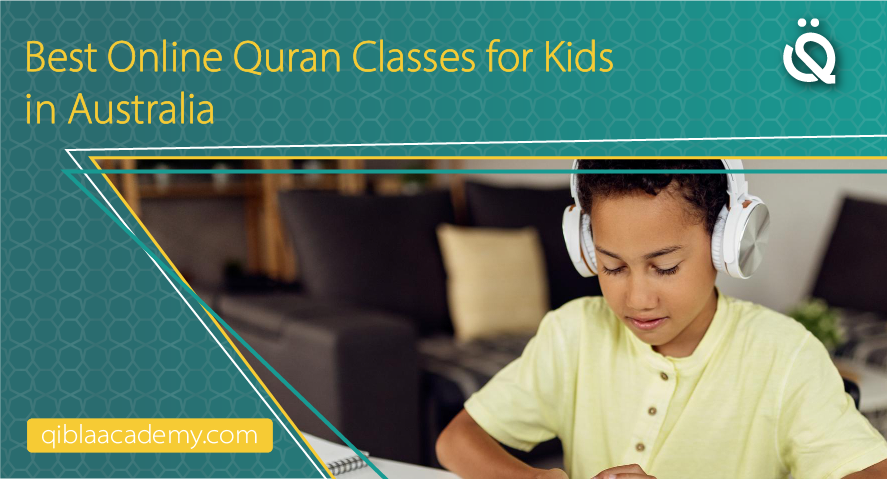
Best Online Quran Classes for Kids in Australia
Best Online Quran Classes for Kids in Australia The best online Quran classes for kids in Australia should fit the child’s learning level and the family’s real weekly routine. Australian parents may need classes that work around school, homework, weekend activities, sibling schedules, and different local time zones. Families living outside major cities may also need access to teachers who are not available nearby. However, convenience alone does not make a Quran programme suitable. Parents should also check whether the teacher gives the child enough reading time, corrects mistakes clearly, communicates with the family, and provides a structured path for Quran reading, Tajweed, Arabic, or Hifz. Before comparing local schedules and Australian options, review the Online Quran Classes for Kids: Parent’s Guide for the complete teacher, safety, curriculum, and trial-class framework. This Australia guide focuses on one decision: How should Australian parents choose an online Quran class that fits their child, time zone, school routine, and learning goal? Quick Answer: What Should Australian Parents Look For? Online Quran classes for kids in Australia should provide time-zone-appropriate scheduling, active child participation, individual correction, parent-approved communication, and a learning plan matched to the child’s demonstrated ability. Use this selection process: Confirm the child’s level → choose one leading goal → compare suitable Australian lesson times → observe a real trial → review the correction and practice task → decide whether the teacher and schedule are sustainable The programme should be able to explain: What Makes an Online Quran Class Suitable for an Australian Family? Australian families do not all need the same class format. A suitable setup depends on where the family lives, when the child is available, and which type of support is difficult to access locally. Australian Family Situation Main Need Suitable Class Feature Child has a busy school week Sustainable Quran routine Short after-school or weekend sessions Family lives in a regional area Wider teacher access Reliable live online instruction Child attends weekend Islamic school Individual correction One-to-one weekday support Parent works changing hours Schedule flexibility Clear rescheduling options Several siblings study Quran Separate levels or shared access Private or carefully matched semi-private lessons Child needs Tajweed correction Live listening and feedback Individual recitation time Child wants to begin Hifz Memorization and revision structure Monitored Hifz plan Young child loses focus quickly Active participation Short, interactive lesson tasks The best arrangement is not always the programme offering the greatest number of weekly lessons. It is the programme the child can attend consistently without being exhausted, rushed, or repeatedly absent. Choose the Child’s Main Quran-Learning Goal Parents should identify the main learning goal before selecting a teacher or plan. Quran Reading Foundations Choose reading foundations when the child cannot reliably recognize Arabic letters, joined forms, vowel marks, or unfamiliar words. The immediate goal is accurate reading rather than speed. Guided Quran Recitation Choose guided recitation when the child can read but hesitates, guesses endings, or repeats mistakes in longer passages. The teacher should listen to the child, model the correction, and ask for another attempt. Applied Tajweed Choose Tajweed when basic reading is reasonably stable but pronunciation, elongation, stopping, or articulation problems remain. Parents considering this path can review Online Quran Classes With Tajweed for Kids: A Parent’s Guide before choosing a general beginner programme. Quran Memorization Choose Hifz when the child can learn the passage accurately and follow a routine that protects both new memorization and older revision. For the wider memorization process, review the Quran Memorization for Kids: A Practical Parent Guide and the Complete Guide to Quran Hifz for Kids. Quranic or Conversational Arabic Arabic study may support comprehension or communication, but it does not automatically replace direct Quran-reading instruction. One goal should lead the current stage. A combined programme should keep the goals clearly separated. How Should Parents Compare Australian Lesson Times? Australia-specific scheduling requires more than asking whether the academy offers “flexible classes.” Parents should confirm the exact lesson time in their own local zone. A suitable time should allow the child to: Parents should also ask how the academy handles seasonal clock changes and whether the lesson remains fixed according to the family’s local time. Do not rely only on a time displayed in the academy’s own country. Ask for the confirmed Australian local time in writing before beginning regular classes. Questions to Ask About Scheduling A flexible programme should explain the policy clearly rather than decide each change informally. Can Online Classes Support Weekend Islamic School? Many children may already attend a mosque, madrasa, or weekend Islamic programme. An additional online class should solve a specific need rather than repeat the same lesson without purpose. Weekend learning may provide: Online lessons may add: Parents should ask the online teacher what the child is already studying elsewhere. The two programmes should not give conflicting targets or different corrections without communication. A useful combined approach may be: Weekend programme for community and wider Islamic learning → online lesson for individual Quran correction → focused home practice during the week The child should still have one clear Quran-reading or memorization priority. Private or Group Quran Classes in Australia? Private, group, and semi-private lessons serve different learners. Private Lessons Private online Quran classes may suit children who: Group Lessons Group classes may work when: Semi-Private Lessons Semi-private classes may work for siblings or two learners with similar levels and goals. They become less suitable when one child needs foundation reading and the other is already studying advanced recitation. For a deeper format decision, continue with Private vs Group Online Quran Classes: Which Helps Kids Learn Faster? How Should Parents Evaluate the Teacher? The teacher should be evaluated through observable teaching behaviour. During a trial lesson, check whether the teacher: A teacher may have strong Quran knowledge but still be unsuitable for a young beginner. Similarly, a friendly manner does not replace accurate recitation and a structured teaching process. Useful correction should follow this sequence: Child attempts → teacher identifies the error → teacher models → child