Uncategorized

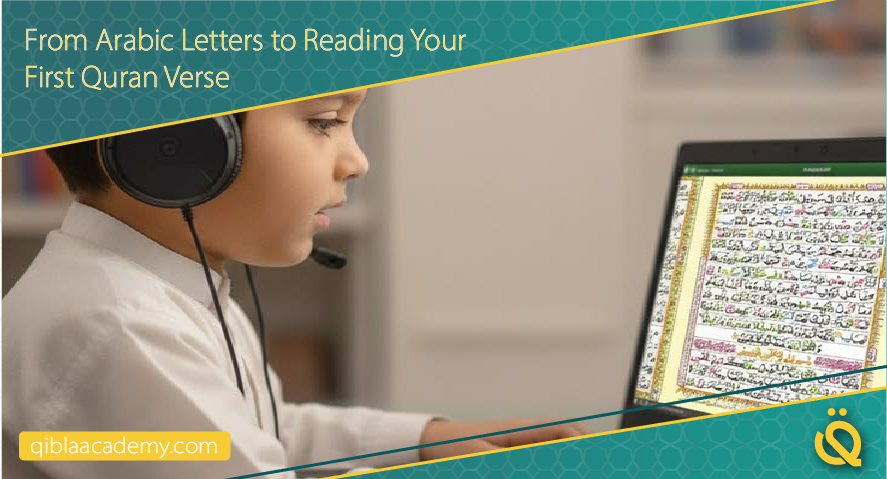
from arabic letters to reading your first quran verse qibla academy
Uncategorized

From Arabic Letters to Reading Your First Quran Verse

From Arabic Letters to Reading Your First Quran Verse Moving from foundation exercises to reading a first Quran verse is a major transition. A learner may recognize Arabic letters, joined forms, and basic vowel marks but still feel uncertain when those skills appear together inside authentic Quranic text. This does not always mean the learner is unprepared. It may mean the transition needs to begin with a short, suitable passage and a controlled reading process. For the complete learning journey, begin with the complete roadmap to learn Quran online. Learners who still guess basic reading marks should first review How Beginners Learn Quranic Vowel Marks. This guide focuses on one question: How can a beginner apply known reading skills inside a first Quranic phrase or verse without relying on memorization or becoming overwhelmed? Quick Answer: How Do You Read Your First Quran Verse? Begin with a short unfamiliar Quranic phrase containing letters, joined forms, and vowel patterns the learner already recognizes. Preview the text, decode one word at a time, combine two or three words into a short phrase, receive focused correction, and read the same passage again with less help. Use this sequence: Confirm readiness → choose a suitable passage → preview the text → decode each word → combine short phrases → correct one priority → review later The goal is not speed or perfect Tajweed. It is to transfer foundation skills into real Quranic reading. First Quran Verse Readiness Check Skill Ready for a Short Quranic Passage When… Return to Foundation Review When… Letter recognition Most letters are identified independently Many letters require alphabet-order clues Joined forms Letters can be identified inside short words Connected forms look completely unfamiliar Vowel marks Basic marks are noticed before reading Fathah, Kasrah, or Dammah are guessed Sukoon and Shaddah Simple examples can be read with guidance Extra vowels are added or doubling is ignored Short-word decoding Unfamiliar words can be attempted carefully Familiar words are read only from memory Correction A model can be repeated and applied again The correction disappears immediately Reading behaviour Learner slows down and checks the text Endings are guessed or letters are skipped A learner does not need perfect fluency before beginning Quranic text. However, short-word decoding should be stable enough that every word does not require complete teacher modelling. When several foundations remain weak, return to targeted review rather than beginning a full page. For example, a learner who recognizes most letters but guesses vowel marks may be close to verse reading, but the first passage should remain short and use familiar mark patterns. A learner who cannot identify connected letters inside basic words is not yet facing a verse-reading problem. The earlier foundation still needs attention. The readiness check should be based on an unfamiliar sample. A memorized surah may sound fluent while hiding weak letter recognition or decoding. Choose a Suitable First Quranic Passage The first passage should match the learner’s existing skills. Choose text that is: Avoid selecting a passage only because it is famous or memorized. A memorized surah may support confidence, but it does not prove that the learner is reading independently. A teacher may begin with one short phrase from a verse rather than asking for the complete line immediately. The goal is not to find the easiest verse in general. It is to select text that allows the learner to apply known reading foundations without continuous guessing. The same passage may be suitable for one learner and too difficult for another. A student who reads Sukoon and Shaddah confidently may handle a phrase containing those patterns. Another learner may need a passage with simpler short vowels first. The teacher should also consider visual density. A short phrase with clear spacing may be more useful than a longer line containing several unfamiliar forms. Preview the Verse Before Reading Aloud Do not ask the learner to read an unfamiliar verse immediately at speed. Use a short visual preview: The preview should remain brief. Its purpose is to reduce visual surprise and encourage the learner to inspect the text before guessing from memory or from the first letter. The learner does not need a detailed explanation of every mark before attempting the passage. The teacher should help the student notice the text structure without reading the complete answer aloud. A useful preview may take only a few moments. It should prepare the learner to begin carefully, not turn the passage into a long theory lesson. Decode One Quranic Word at a Time Approach the passage as a sequence of manageable words. Use this process: Identify the letters → notice the marks → produce the sounds → combine carefully → read the complete word Begin from the right and follow the actual letter order. Do not provide the complete word immediately after the first hesitation. Give the learner enough time to inspect the text and attempt the reading process. When a word is difficult, the teacher may: The aim is to support decoding without replacing the learner’s attempt. The learner should continue looking at the Arabic text while producing the sounds. If the teacher reads the complete word too quickly, the student may repeat it successfully without understanding how the letters and marks produced that reading. A useful correction preserves the learner’s role in the process. For example, the teacher may point to an overlooked Kasrah and ask the learner to try again rather than immediately supplying the complete word. Combine Words Into Short Quranic Phrases After two or three words can be decoded separately, combine them gradually. Use this progression: Read the first word → read the second word → repeat both together → add the next word → read the short phrase Do not force the learner to read the complete verse in one breath. The teacher may divide the passage into short, natural sections that match the learner’s level. Slow, controlled reading is more useful than fast guessing. The purpose of phrase reading is to reduce unnecessary

best online quran classes for kids in the usa qibla academy
Uncategorized

Online Quran Classes for Kids in USA: What Parents Should Look For

Online Quran Classes for Kids in the USA Online Quran classes for kids in the USA should match the child’s learning level, provide clear live correction, and fit the family’s school schedule and local time zone. Parents may need lessons that fit around school, homework, sports, family activities, weekend Islamic school, and different time zones. Families living far from a mosque or Islamic centre may also need access to Quran teachers who are not available locally. However, convenience alone does not make a programme suitable. Parents should check whether the child participates actively, receives clear correction, follows an appropriate curriculum, and can attend the proposed lesson time consistently. Before comparing USA-specific schedules and programmes, review the Online Quran Classes for Kids: Parent’s Guide for the complete framework covering teachers, curriculum, safety, pricing, and trial lessons. This guide focuses on one decision: How should parents in the United States choose an online Quran class that fits their child, time zone, school routine, and learning goal? Quick Answer: What Should USA Parents Look For? Online Quran classes for kids in the USA should offer time-zone-appropriate scheduling, active child participation, individual correction, parent-approved communication, and a learning path based on the child’s demonstrated ability. Use this selection process: Check the child’s level → choose one leading goal → confirm the local lesson time → observe a real trial → review the teaching and correction → decide whether the teacher and schedule are sustainable The academy should be able to explain: What Makes Online Quran Classes for Kids in the USA Suitable for Your Family? Families across the United States do not all need the same class format. A suitable arrangement depends on the child’s level, the family’s location, the availability of local Quran instruction, and the weekly schedule. USA Family Situation Main Need Suitable Class Feature Child has a busy school week Sustainable Quran routine Short after-school or weekend lessons Family lives far from a mosque Wider teacher access Reliable live online instruction Child attends weekend Islamic school Individual correction Focused weekday support Parent works changing hours Scheduling flexibility Clear rescheduling policies Several siblings study Quran Suitable level placement Private or carefully matched semi-private lessons Child needs Tajweed correction Live feedback Individual recitation time Child wants to begin Hifz Memorization and revision Structured Hifz support Young child loses focus quickly Active participation Short interactive tasks For most families, the best fit is not simply the academy with the most available classes. It is the one that can match the child’s current Quran level with a realistic US lesson time and enough individual recitation and correction to make each session useful. The best option is not necessarily the programme offering the largest number of classes. It is the programme the child can attend consistently without becoming rushed, tired, or repeatedly absent. Choose the Child’s Main Learning Goal Parents should identify the child’s immediate goal before selecting a teacher or monthly plan. Quran Reading Foundations Choose reading foundations when the child cannot reliably recognize Arabic letters, joined forms, vowel marks, or unfamiliar Quranic words. The current priority should be accurate recognition and decoding rather than speed. Guided Quran Recitation Choose guided recitation when the child can read but hesitates, guesses word endings, or loses accuracy in longer passages. The teacher should hear the attempt, identify the main error, model the correction, and ask the child to read again. Applied Tajweed Choose applied Tajweed when reading is reasonably stable but pronunciation, articulation, lengthening, or stopping errors continue. Parents considering this path can review Online Quran Classes With Tajweed for Kids: A Parent’s Guide before enrolling in a general Quran-reading course. Quran Memorization Choose Hifz when the child can learn the selected passage accurately and follow a plan that protects both new memorization and older revision. For the wider memorization process, review the Quran Memorization for Kids: A Practical Parent Guide and the Complete Guide to Quran Hifz for Kids. Quranic or Conversational Arabic Arabic study can support comprehension or communication, but it does not automatically replace direct Quran-reading instruction. A combined plan may work, but one goal should lead the current stage. How Do US Time Zones Affect Online Quran Classes for Kids? The United States covers several time zones, so an academy’s advertised “evening class” may not be an evening class for the child. Most families in the contiguous United States will schedule according to: Families in Alaska, Hawaii, Arizona, US territories, or locations with different daylight-saving arrangements should confirm their local time separately. NIST explains that US daylight saving time generally begins on the second Sunday in March and ends on the first Sunday in November, while local exceptions can apply. Parents should therefore confirm whether a recurring lesson will shift during the year rather than relying only on a general EST, CST, MST, or PST label. Review NIST’s official local-time guidance. Questions to Ask About Scheduling Before enrolling, ask: A flexible schedule should have a clear policy. It should not depend on informal weekly arrangements that are difficult for both the family and teacher to maintain. How Should Quran Lessons Fit the US School Week? Children in the USA may balance school, homework, sports, tutoring, clubs, religious activities, and family responsibilities. Quran learning should become a sustainable part of this routine rather than another source of repeated pressure. Common options include: After-School Lessons These may work when the child has enough time to eat, rest, and prepare before class. Scheduling the lesson immediately after a long school day may reduce attention. Early-Evening Lessons These can support a stable routine, but parents should avoid times that regularly conflict with dinner, bedtime, or homework. Weekend Lessons Weekend classes may help families with crowded weekdays. However, parents should avoid placing Quran class into a weekend already overloaded with sports, tutoring, Islamic school, and family commitments. Short Weekday Sessions Shorter, focused lessons may help beginners and children who require frequent pronunciation correction. The useful schedule is the one the child can repeat calmly. A strong teacher

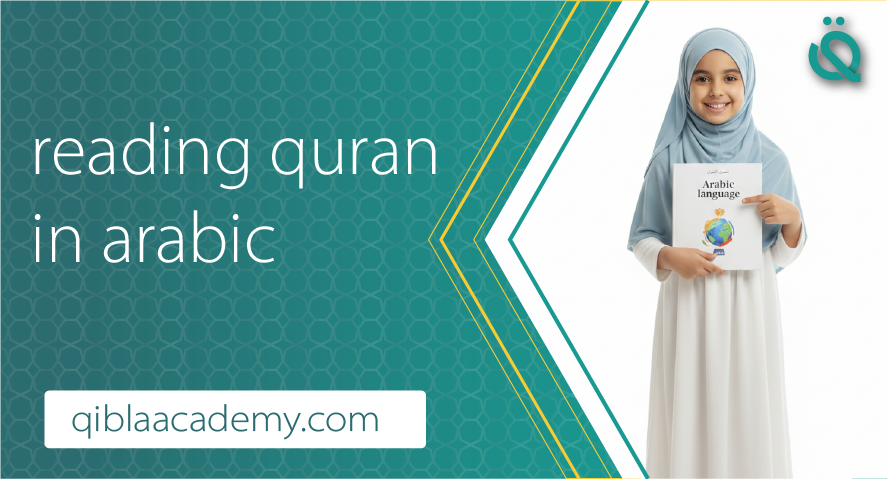
Young girl wearing a hijab holding an Arabic language book, promoting reading Quran in Arabic, with the text “reading quran in arabic” and the website qiblaacademy.com.
Uncategorized

reading quran in arabic

reading quran in arabic is often the first step that many learners feel both excited and nervous about. You may wonder if Arabic is too difficult, or if you will ever pronounce the words correctly. However, the truth is that anyone can learn with the right guidance and consistent practice. At Qibla Academy, students from all levels discover that learning the Quran in its original language is not only possible, but deeply rewarding. Moreover, many beginners feel overwhelmed at the beginning. They worry about letters, pronunciation, and Tajweed rules. However, with a clear path, everything becomes manageable. In addition, learning gradually removes fear and builds confidence step by step. Most importantly, you don’t need to be perfect—you just need to start. Therefore, whether you are a complete beginner, a parent, or an adult returning to learning, this guide will show you exactly how to succeed in reading the Quran in Arabic with clarity and confidence. You can also read about Coran Online: Your Global Gateway to Spiritual Growth reading quran in arabic Understanding reading quran in arabic Basics What Does reading quran in arabic Really Mean reading quran in arabic means engaging directly with the original words of the Quran, focusing on Quran Reading, pronunciation, and gradual fluency. However, many learners assume it requires advanced Arabic knowledge. In reality, you only need to start with the basics. For example, a beginner student often starts by learning the Arabic alphabet. Meanwhile, they practice sounds daily with simple repetition. As a result, within a few weeks, they begin recognizing letters inside words. Moreover, this process builds confidence quickly. Step by step, learners move from letters to words, then to full verses. A measurable result could be reading short surahs within one month. Most importantly, learners feel motivated because progress is visible. How reading quran in arabic Fits Daily Life In today’s busy world, many people think they don’t have time. However, learning can be flexible. For example, an adult can dedicate just 15 minutes daily. Because of this, learning becomes consistent rather than overwhelming. Moreover, combining Learn Quran Online tools with daily practice makes the process smoother. As a result, even busy individuals can progress steadily. Psychologically, small daily wins reduce stress and build habit. Who Should Learn reading quran in arabic Beginners Without Arabic Background Many beginners ask: “Is Arabic hard to read?” However, the answer is no when you follow a structured method. For example, a student with zero knowledge can start with simple letters and sounds. Step by step, lessons introduce pronunciation. In addition, repetition strengthens memory. As a result, beginners can read basic words within weeks. Most importantly, beginners realize that difficulty disappears with practice. Therefore, fear turns into confidence. Adults Returning to Quran Learning Adults often hesitate because they feel it’s too late. However, reading quran in arabic is possible at any age. For instance, a working adult can learn through short daily sessions. Moreover, adults benefit from discipline and focus. As a result, they often progress faster than expected. Psychologically, learning privately removes embarrassment. Importance of reading quran in arabic Spiritual Connection Through Arabic Quran Reading Understanding the Original Words reading quran in arabic allows you to connect directly with the words of Allah. However, translations cannot fully capture the depth of meaning. For example, when a student reads in Arabic, they feel the rhythm and beauty of the Quran. As a result, their spiritual connection deepens. Moreover, this enhances focus during prayer. Step by step, learners begin to recognize patterns in words. A measurable result is understanding repeated phrases. Most importantly, this builds a stronger bond with the Quran. Enhancing Worship Experience In addition, reading correctly improves your salah. For instance, proper pronunciation ensures accurate recitation. Because of this, your worship becomes more meaningful. Psychologically, confidence in reading removes hesitation during prayer. Therefore, consistency increases. Educational Value of reading quran in arabic Building Strong Foundations Learning Arabic Quran reading builds a solid foundation for Islamic Studies. However, many learners skip basics and struggle later. For example, mastering letters and sounds first makes advanced learning easier. As a result, students avoid confusion. Preparing for Tajweed and Memorization Moreover, reading fluently prepares you for Quran Memorization. For instance, correct pronunciation helps memorization stick. Therefore, starting with reading ensures long-term success. Benefits of reading quran in arabic correctly Accuracy and Confidence Avoiding Common Mistakes reading quran in arabic correctly helps avoid pronunciation errors. However, many learners worry about making mistakes. For example, a student practicing daily improves gradually. As a result, errors decrease over time. Step by step, learners refine their pronunciation. A measurable result is reading a full page without major mistakes. Building Self-Confidence In addition, correct reading boosts confidence. For instance, students feel comfortable reading in front of others. Most importantly, confidence encourages consistency. Long-Term Learning Benefits Easier Memorization Correct reading makes memorization easier. Therefore, students can retain verses longer. Better Understanding Moreover, pronunciation clarity improves understanding. As a result, learning becomes meaningful. reading quran in arabic for Beginners Starting from Zero Learning Letters and Sounds Beginners start with the Arabic alphabet. However, this step is simpler than it seems. For example, learning a few letters daily leads to quick progress. As a result, recognition improves within weeks. Overcoming Pronunciation Fear Many beginners fear incorrect pronunciation. However, practice removes fear. Step by step, repetition builds confidence. Most importantly, mistakes are part of learning. Building a Strong Base Daily Practice Routine Consistency is key. For example, 10–15 minutes daily can lead to steady improvement. Using Guided Lessons Moreover, structured Quran Classes help beginners stay on track. reading quran in arabic for Kids Making Learning Fun Interactive Methods Children learn best through fun. For example, games and visuals improve engagement. Building Early Habits Moreover, early learning creates lifelong habits. Supporting Children Role of Parents Parents should encourage daily practice. Creating a Positive Environment A quiet space helps children focus. reading quran in arabic for Adults Flexible Learning Approach Managing Busy Schedules Adults can learn in short sessions.

Muslim boy learning Quran online at home in the USA with QIBLA ACADEMY.
Uncategorized

Learn Quran Online USA

Learn Quran Online USA Many Muslim families in the United States struggle to find trusted Quran teachers nearby, especially for children and beginners. Between busy school schedules and limited local options, starting Quran learning can feel overwhelming.That’s why QIBLA ACADEMY provides a simple and reliable way to learn from home with qualified Al-Azhar teachers, flexible class times, and one-to-one support.You can begin with a free trial lesson and build a strong connection with the Quran step by step. Start Your Free Trial Today Why Online Quran Learning Is Growing in the USA Across the United States, many Muslim families are looking for better ways to help their children and themselves learn Quran consistently. While Islamic education has always been important, the reality is that not every city has easy access to qualified teachers or structured Quran programs. That’s why online Quran learning is becoming the preferred choice for families in America. It removes the stress of travel, fits into busy schedules, and gives students the chance to learn in a calm and supportive environment. More importantly, it allows parents to ensure their children are learning correctly from trusted instructors — no matter where they live. Islamic Centers Are Not Available Everywhere One of the biggest challenges for Muslims in the USA is that Islamic centers and Quran schools are often limited to major cities. Families living in smaller towns may have very few options, or none at all. Even when a masjid is available, Quran classes may not always be consistent, organized, or suitable for every age group. Online learning solves this issue completely. Instead of searching for a local teacher, students can connect with qualified Quran instructors from anywhere in the country, without depending on location. Families Need Flexible Learning Options Life in America is busy. Parents are balancing work, school schedules, and daily responsibilities, which makes it difficult to commit to fixed in-person classes. Many families want Quran education, but they need something that fits naturally into their routine. With online Quran classes, flexibility becomes a major advantage. You can choose class times that work for your family — evenings, weekends, or even early mornings — without disrupting school or work. This makes Quran learning sustainable, not stressful. Children Learn Better at Home For many children, learning at home creates a more comfortable and focused experience. They feel safe, relaxed, and more confident when they are not surrounded by unfamiliar environments. Online Quran lessons also allow parents to stay involved and monitor their child’s progress closely. Instead of rushing to a class outside the home, children can learn in a familiar space, with one-to-one attention that helps them improve faster and build a stronger connection with the Quran over time. Private Quran Teachers for Faster Progress One of the main reasons families in the USA choose online Quran learning is the ability to study with private teachers instead of crowded group classes. When a student learns one-to-one, progress becomes faster, mistakes are corrected immediately, and confidence grows with every session. Many parents start by exploring general programs like Learn Quran Online, but quickly realize that private lessons offer the structure and attention their children truly need. One-to-One Attention Makes a Difference In traditional settings, teachers often work with many students at the same time. This makes it difficult to focus on one child’s exact needs. With private Quran classes, the teacher is fully dedicated to the student. Every lesson is personalized based on: This is especially helpful for beginners and children who need patient guidance from the start. Families who want a more structured experience often prefer dedicated Online Quran Classes that offer full attention and clear progress tracking. Instant Feedback in Every Session One of the biggest benefits of learning with a private Quran teacher is immediate correction. Instead of repeating mistakes for weeks, students receive instant feedback on: This makes each session more effective and helps students improve much faster than in group environments. Even small corrections can make a huge difference in Quran recitation over time. Learn Comfortably Without Pressure Many beginners — both adults and children — feel nervous when starting Quran learning. That’s completely normal. Private online sessions create a safe space where students can learn without embarrassment or pressure. They can ask questions freely, repeat verses calmly, and build confidence step by step. Learning Quran should feel peaceful, not stressful — and private classes make that possible. Quran Classes for Kids Across America For Muslim parents in the USA, finding the right Quran classes for children is not always easy. Many families want their kids to learn the Quran correctly, but they also want an experience that feels safe, enjoyable, and supportive. That’s why online Quran learning has become a trusted solution for parents across America. With the right teacher and the right environment, children can build a strong relationship with the Quran from an early age. At QIBLA ACADEMY, kids learn through structured one-to-one lessons designed specifically to match their age, attention span, and learning style. Patient Teachers Who Understand Children Teaching children requires more than knowledge — it requires patience, kindness, and the ability to explain Quran in a way that feels simple. Many parents worry their child may feel overwhelmed or lose interest quickly. That’s why having experienced teachers makes all the difference. In online classes, children receive calm guidance, gentle correction, and encouragement that helps them stay motivated without pressure. Fun and Interactive Online Lessons Children learn best when lessons feel engaging. Online Quran classes today are not boring lectures. Instead, they include: This keeps kids focused and excited to attend each session, especially when the learning environment is designed for them. Building Strong Islamic Habits Early The earlier a child connects with the Quran, the stronger that bond becomes over time. Learning Quran as a child helps build: For many families across America, online Quran learning is not just about reading — it’s about raising children with Quran as part of their lifestyle. Quran Programs for

learn quran tajweed online beginner roadmap qibla academy
Uncategorized

Learn Quran Online with Tajweed

Learn Quran Tajweed Online: A Complete Beginner Roadmap Learning Quran Tajweed online is easier when you follow the skills in the right order. Some learners need stronger Quran-reading foundations before focusing on Tajweed rules. Others can already read but struggle with Makharij or recurring pronunciation errors. A more experienced learner may understand Tajweed terminology but still find it difficult to apply the rules during actual recitation. These learners should not begin at the same stage. If your wider goal includes Quran reading, Arabic, memorization, or recitation as well as Tajweed, begin with the complete roadmap to learn Quran online. This guide focuses specifically on the Tajweed journey: How should you learn Quran Tajweed online in the right order so that every rule improves your actual recitation? How to Learn Quran Tajweed Online Step by Step To learn Quran Tajweed online, first confirm that your basic Quran reading is stable enough for the current stage. Then improve Makharij, learn the Tajweed rules that affect your recitation, apply them in real Quranic passages, practise the corrected version, and review whether the improvement remains later. A practical sequence is: Reading foundations → Makharij → core Tajweed rules → applied recitation → live correction → focused practice → progress review You do not need to master every Tajweed rule before reading Quran. A stronger approach is to learn each rule when you are ready to recognize and apply it during actual recitation. What Should You Know Before Learning Quran Tajweed Online? Tajweed improves how Quran is recited. It should not be used to hide an earlier reading problem. Before focusing on several Tajweed rules, check whether you can: You do not need perfect fluency. However, if nearly every word requires complete teacher modelling, the main need may still be Quran-reading foundations. A learner who decodes slowly but accurately can often begin basic Tajweed correction. Think of it this way: Reading helps you identify the written word. Tajweed helps you recite that word correctly. Learners who are unsure which problem comes first can continue with Quran Online With Tajweed: Do You Need Strong Quran Reading First? Step 1: Build the Quran Reading Foundation for Tajweed Tajweed works best when the learner can already inspect the written text carefully. Before advanced correction, the learner should be able to identify: If a word is being guessed incorrectly, adding another Tajweed rule will not solve the underlying reading problem. For example, a learner who repeatedly adds a vowel that is not written may need reading correction before learning a new Tajweed definition. This is why a strong Tajweed roadmap begins with diagnosis. Beginners who need a more focused starting point can use Tajweed Classes Online for Beginners: What Should You Learn First? Step 2: Learn Makharij for Clear Quran Pronunciation Once the written word is recognizable, pronunciation becomes the next major layer. Makharij refers to the points or mechanisms through which Arabic sounds are produced. A beginner does not need to memorize a long technical list before practising. The first practical question is: Can you produce the Quranic letter clearly enough that it does not repeatedly sound like another letter? Common difficulties may include: A useful correction process is: Hear the model → isolate the sound → repeat it → place it inside a word → read it in a Quranic phrase → review it later Cambridge University Press’s reference work on Arabic phonology and script explains the relationship between Arabic letters, language sounds, and connected writing. It is not a Tajweed manual, but it supports an important distinction for learners: recognizing a written letter and producing its sound are related but separate skills. Review Cambridge’s reference on Arabic phonology and script. For focused pronunciation work, continue with Learn Quran Online With Tajweed: How Makharij and Pronunciation Are Corrected. Step 3: Learn the Core Tajweed Rules in the Right Order Once basic reading and pronunciation are sufficiently stable, Tajweed rules become easier to understand and apply. Important rule groups may include: The goal is not to memorize every rule name at once. Instead, ask: What changes in the way this sound should be recited in this context? Learn one manageable rule group at a time: Once the learner can identify a rule in unfamiliar material, the next step is producing it consistently during actual recitation. For the full rule structure, continue with Learn Quran Tajweed Online: How the Core Tajweed Rules Fit Together. Step 4: Apply Tajweed Rules in Real Quran Recitation Understanding a Tajweed rule is only useful when you can apply it while reading Quran. A practical learning pattern is: Identify the rule → read the word → receive correction → repeat the word → return to the passage → apply the rule again The teacher should avoid interrupting every few seconds with unrelated theory. Correction should focus on the pattern the learner is currently practising. For example, when the lesson focuses on Qalqalah, the learner should receive enough examples to hear, produce, and repeat that pattern before several new rules are introduced. At this stage, the learner begins moving from “I know what the rule means” to “I can recognize and produce it while reciting.” For detailed applied practice, continue with Online Tajweed Course: How Madd, Ghunnah, Qalqalah, and Waqf Are Taught. Step 5: Use Live Tajweed Correction When Accuracy Is Unclear Independent materials can explain rules, provide examples, and support repetition. Live correction becomes especially useful when: During a live lesson, the teacher can respond to the learner’s actual recitation rather than a theoretical example. A useful correction cycle is: Learner recites → teacher identifies the priority error → teacher models → learner repeats → learner reads in context → teacher checks it later The correction should change the learner’s next attempt. If a teacher simply provides the correct answer without giving the learner another chance to apply it, there is little evidence that the correction has been understood. Learners deciding how much teacher support they need can continue with Can You Learn