Do You Need Arabic Before Learning Quran Online?
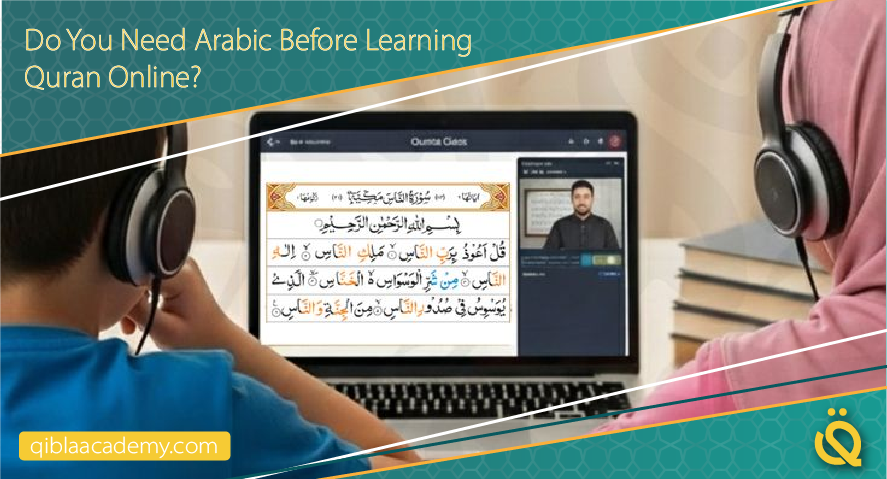
Many beginners delay Quran lessons because they believe they must learn Arabic as a complete language first.
They may assume they need conversational fluency, a large vocabulary, or detailed grammar knowledge before they can begin reading Quranic text.
You can learn Quran without Arabic conversation skills. However, if your goal is to read the Quran directly, you will still need to learn its Arabic script, basic sounds, joined letter forms, and reading marks.
For the complete learning journey, begin with the complete roadmap to learn Quran online. Learners starting from zero can also review How to Start Learning Quran Online as a Beginner.
This guide answers one specific question:
Should you study Arabic as a language before beginning Quran lessons, or can you start with Quran reading immediately?
Quick Answer: Can You Learn Quran Without Arabic?
Yes. You can begin learning Quran without speaking conversational Arabic or understanding detailed Arabic grammar.
If your goal is recitation, start with Arabic letters, sounds, joined forms, vowel marks, and guided reading. If your goal is understanding Quranic vocabulary and sentence structure, add Quranic Arabic. Spoken Arabic is a separate path for everyday communication.
Use this distinction:
Quran reading teaches you to recognize and recite the text. Quranic Arabic helps you understand its language. Spoken Arabic helps you communicate.
Choose the path that solves your immediate learning need.
What Does “Knowing Arabic” Mean?
“Knowing Arabic” can describe several different abilities:
- Recognizing Arabic script
- Reading words with vowel marks
- Reciting Quranic passages
- Understanding Quranic vocabulary
- Studying Arabic grammar
- Speaking conversational Arabic
These abilities are connected, but they are not interchangeable.
A learner may read Quranic script accurately without being able to hold an Arabic conversation. A fluent Arabic speaker may still need help with Quranic pronunciation, Tajweed, or formal recitation.
A student may also understand the meaning of several Quranic words while remaining unable to decode an unfamiliar verse independently.
Another learner may read accurately but depend on translation to understand the passage.
Before selecting a course, identify which ability supports your current goal.
The phrase “I do not know Arabic” is therefore too broad to determine the correct starting point. The learner should clarify whether the difficulty is reading the script, understanding vocabulary, speaking the language, or applying pronunciation correction during Quran recitation.
Quran Reading, Quranic Arabic, and Spoken Arabic
| Learning Path | Main Goal | What You Study First | Best Choice When… |
|---|---|---|---|
| Quran reading | Recognize and recite Quranic text | Letters, sounds, joined forms, and vowel marks | You cannot read Quran independently |
| Guided recitation | Improve reading accuracy and fluency | Short passages, correction, and repetition | You can decode words but hesitate or guess |
| Applied Tajweed | Correct recurring pronunciation errors | Rules connected to actual recitation | You can read but repeat sound or elongation mistakes |
| Quranic Arabic | Understand vocabulary and sentence structure | Common words, morphology, and grammar | Understanding meaning is the main goal |
| Spoken Arabic | Communicate in Arabic | Listening, speaking, vocabulary, and grammar | Everyday conversation is the main goal |
| Combined path | Read and understand gradually | Reading foundations plus selected vocabulary | Both recitation and comprehension matter |
A learner does not need to complete spoken Arabic before beginning Quran reading, guided recitation, or basic pronunciation correction.
Ask:
Which Arabic-related skill do I need for my current Quran goal?
If the learner cannot recognize Arabic letters, spoken conversation lessons will not directly solve the reading problem.
If the learner can read accurately but wants to understand recurring vocabulary, repeating basic letter exercises may not address the main goal.
If the learner wants both recitation and understanding, the two paths can be combined gradually. However, one priority should still lead the current stage so lessons and practice remain clear.
What Arabic Skills Do You Need to Read Quran?
A complete beginner needs a limited set of script-reading skills:
- Recognize individual Arabic letters
- Connect letters with their basic sounds
- Identify letters in joined forms
- Read basic vowel marks
- Decode unfamiliar short words
These are Quran-reading foundations. They do not require conversational fluency or mastery of Arabic grammar.
The immediate goal is to connect the written script with the expected sounds. Detailed language study can be added when understanding becomes a primary goal.
A learner may therefore begin Quran reading without knowing how to form Arabic sentences or participate in everyday conversation.
The student does not need to understand every word before learning to decode it. Reading and comprehension can develop on separate timelines.
However, reading from transliteration or memorizing familiar passages should not be confused with independent recognition of Arabic script.
For the complete skill order and readiness criteria, continue with First Quran Learning Skills: A Step-by-Step Beginner Sequence.
Learners who need focused help can continue with:
- How to Recognize Arabic Letters for Quran Reading
- Why Joining Arabic Letters Feels Difficult
- How Beginners Learn Quranic Vowel Marks
Choose the Path That Matches Your Immediate Goal
Begin with Quran reading foundations when you cannot recognize or decode the script.
Choose guided recitation when you can read words but hesitate, guess, or lose accuracy in longer passages.
Add applied Tajweed when recurring pronunciation problems remain during real recitation.
Choose Quranic Arabic when understanding vocabulary and sentence structure is the primary goal.
Choose spoken Arabic when everyday communication is the primary goal.
A combined path may work, but one priority should lead the current stage. Language study should not repeatedly replace essential reading practice when the script remains unstable.
For example, a beginner may learn the meanings of selected words while practising Arabic letters. This can increase motivation without turning every lesson into a grammar class.
A learner who already reads Quran fluently may place more emphasis on vocabulary, morphology, or reading comprehension.
The better choice depends on the immediate problem:
- Script problem: begin with Quran reading.
- Hesitation problem: choose guided recitation.
- Pronunciation problem: add applied Tajweed.
- Understanding problem: study Quranic Arabic.
- Communication goal: study spoken Arabic.
When Should You Add Quranic Arabic?
There is no single required point for adding Quranic Arabic.
Some learners introduce selected vocabulary early because understanding increases motivation. Others prefer to stabilize reading before adding a separate language lesson.
Add Quranic Arabic early when:
- Understanding is a major goal
- The learner can manage two separate priorities
- Language study does not replace reading practice
- The weekly schedule allows enough time for both paths
Delay detailed language study when:
- Most letters remain unfamiliar
- Joined forms or vowel marks still cause major confusion
- Reading practice is repeatedly skipped
- Several active goals already feel overwhelming
The decision is not between reading and understanding forever. It is about deciding which ability should lead the current stage.
A learner may begin with reading as the primary path and add selected vocabulary gradually. Later, Quranic Arabic can become a more structured goal.
Another learner may already read confidently and begin language study immediately because comprehension is now the main priority.
The two paths can support one another when their roles remain clear.
Can Translation or Transliteration Replace Arabic Study?
Translation can help the learner understand general meaning, themes, and explanations. It does not teach direct reading of Arabic script.
Transliteration may provide temporary support with a familiar phrase, but long-term dependence on Latin letters can delay direct recognition of Arabic letters and reading marks.
Audio recitation supports listening and repetition, but it cannot confirm whether the learner is producing each sound accurately.
Use each tool for its proper role:
- Translation supports meaning
- Transliteration provides temporary reading support
- Audio supports listening
- Quranic Arabic supports language understanding
- A teacher supports individual reading and pronunciation correction
Support tools should not become permanent substitutes for the ability the learner wants to develop.
A translation is useful when the learner wants to understand a passage but does not yet know enough Arabic vocabulary.
Transliteration may help a new learner follow a short familiar phrase, but it should not replace direct work with Arabic script when independent Quran reading is the goal.
Audio can provide a correct model, but the learner may still repeat the sound incorrectly without realizing it.
The correct tool depends on the purpose. Meaning, reading, listening, and pronunciation feedback require different forms of support.
Common Misunderstandings About Arabic and Quran Learning
| Learner Concern | Common Misunderstanding | Better Decision |
|---|---|---|
| “I cannot speak Arabic” | Quran lessons must wait | Begin with Arabic-script reading |
| “I know several surahs” | Memorization proves reading ability | Test an unfamiliar sample |
| “Joined words look different” | The alphabet has been forgotten | Practise connected forms |
| “I want to understand Quran” | Recitation lessons are unnecessary | Combine reading and Quranic Arabic gradually |
| “I use transliteration” | Latin letters can replace Arabic script | Use transliteration temporarily |
| “I speak an Arabic dialect” | Spoken fluency guarantees Quran reading | Check script and recitation separately |
| “I am studying many subjects” | More topics create faster progress | Choose one priority path |
The better decision is the one that solves the learner’s present problem without blocking future goals.
Knowing several memorized surahs may show strong memory and familiarity, but it does not prove that the learner can decode unfamiliar Quranic words.
Speaking an Arabic dialect may support vocabulary and communication, but formal Quran recitation still requires separate attention to script, pronunciation, and Tajweed.
Likewise, studying reading, grammar, conversation, translation, and memorization at the same time may make the learner feel active while leaving every goal underdeveloped.
One leading priority creates a clearer path.
How Reading and Understanding Can Support Each Other
Reading and understanding are separate abilities, but they do not need to remain isolated.
A learner may begin by reading a short verse accurately, then study the meaning of selected recurring words.
Understanding can improve attention and motivation because the learner recognizes that the text communicates meaning rather than functioning only as a pronunciation exercise.
At the same time, vocabulary study should not hide weaknesses in reading.
A student who understands the translation of a verse may still guess the Arabic words instead of decoding them. Another may pronounce a passage accurately without understanding its vocabulary.
The two paths can work together when the lesson clearly identifies which outcome is being practised.
For example:
- A reading lesson may focus on joined forms and vowel marks.
- A Quranic Arabic lesson may focus on vocabulary and sentence structure.
- A combined review may connect one accurately read phrase with selected meanings.
The learner should know whether the current task is improving recitation, comprehension, or both.
What Should an Online Teacher Check?

Before recommending Quran reading, Quranic Arabic, or a combined path, the teacher should understand the learner’s goal and demonstrated ability.
A useful initial check may include:
- Letter and joined-form recognition
- Basic vowel-mark reading
- Short-word decoding
- An unfamiliar phrase
- Response to pronunciation correction
- Interest in vocabulary and meaning
- Available lesson and practice time
The teacher should then explain:
- Which path should come first
- Why it matches the learner’s goal
- Whether language study should begin now or later
- What should be practised between lessons
- How the plan will be reviewed
A recommendation should not assume that every non-Arabic speaker needs the same course.
One learner may need a complete Arabic-script foundation. Another may be ready for guided recitation. A third may read accurately and need Quranic Arabic rather than another beginner reading course.
The recommendation should connect the learner’s current ability with the stated goal.
If the learner wants to understand Quran but still cannot decode words, the teacher may recommend reading foundations first while adding limited vocabulary support.
If reading is stable, language study may take a larger role.
How Qibla Academy Can Help You Choose the Right Path
Use a trial lesson to determine whether the learner needs Quran reading foundations, guided recitation, applied Tajweed, Quranic Arabic, or a combined path.
Ask the teacher to listen to a short unfamiliar sample and explain:
- Which skill should come first
- Whether the main need is reading or language understanding
- Which material will be used
- What should be practised between lessons
- Whether two learning paths can be managed realistically
- How readiness for the next stage will be reviewed
The recommendation should reflect the learner’s demonstrated ability and stated goal.
A useful recommendation should also explain what the learner does not need to study yet.
For example, a complete beginner may not need a detailed grammar course before recognizing letters and vowel marks. A confident reader may not need to restart from the first page of Qaida when understanding vocabulary is now the main goal.
You can compare Qibla Academy’s Quran Teachers and review the Current Class Plans before selecting regular lessons.
Choose the Right Starting Path
Attempt a short sample, explain your goal, and ask whether Quran reading or Quranic Arabic should come first.
Frequently Asked Questions
1. Can I Learn Quran Online Without Knowing Arabic?
Yes. You can begin with Arabic letters, sounds, joined forms, vowel marks, and guided reading without speaking conversational Arabic.
2. Do I Need to Understand Arabic to Read Quran?
No. Reading and language comprehension are separate abilities. You can learn to recite the script first and add Quranic Arabic as a separate or combined path.
3. Should I Learn Arabic or Tajweed First?
If you cannot read the script reliably, begin with reading foundations and basic pronunciation correction. Detailed Tajweed or Arabic study can expand as the reading foundation becomes more stable.
4. Can I Learn Quran Using Transliteration?
Transliteration may provide temporary support, but it should not replace Arabic letters and direct decoding when independent Quran reading is the goal.
5. Is Quranic Arabic the Same as Spoken Arabic?
No. Quranic Arabic focuses on vocabulary, grammar, and structures that support understanding Quranic text. Spoken Arabic focuses on everyday communication.
Conclusion: Choose Reading or Understanding Based on Your Goal
You do not need conversational Arabic before beginning Quran lessons.
If you cannot recognize letters or decode words, begin with Quran-reading foundations. If you can read but hesitate, choose guided recitation. If pronunciation errors repeat, add applied Tajweed. If understanding vocabulary and sentence structure is the main goal, begin Quranic Arabic.
Do not delay Quran reading because you are not fluent in Arabic. At the same time, do not assume that accurate recitation automatically provides language understanding.
Use this decision rule:
Begin with Quran-reading foundations when the script is the problem. Add Quranic Arabic when understanding is the goal. Combine both gradually when the learner can manage two clearly separated priorities.
Choose one leading path, keep the next stage clear, and review whether the plan still matches the learner’s goal.