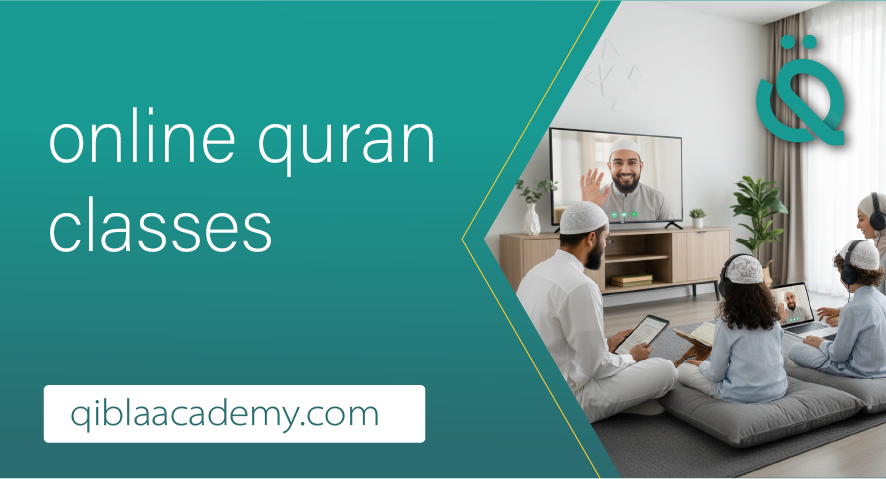
Online Quran classes for kids in Australia should match the child’s learning level and fit naturally around the family’s weekly routine.
Australian parents may need lessons that work around school, homework, weekend activities, sibling schedules, and different local time zones. Families living outside major cities may also benefit from access to Quran teachers who are not available nearby.
But convenience alone does not make a programme suitable.
Parents should also check whether the child receives enough live reading time, whether mistakes are corrected clearly, and whether the programme provides a structured path for Quran reading, Tajweed, Arabic, or Hifz.
Quick Answer: What Should Parents Check in Online Quran Classes for Kids in Australia?
Before enrolling, Australian parents should check seven things:
- Teacher quality and experience
- Child safety and parent visibility
- Live Quran reading and correction
- Tajweed or Hifz support where needed
- Lesson times that fit Australian schedules and time zones
- Clear parent progress updates
- A trial lesson or initial assessment
A suitable programme should be able to explain:
- Which skill should come first
- Why it matches the child’s current level
- What will happen during each lesson
- What should be practised at home
- How parents will receive updates
- When the learning plan will be reviewed
The strongest option is not simply the class with the most flexible timetable.
It should match the child’s current ability, give them enough active recitation time, and fit consistently around school and family commitments.
For the complete comparison framework covering teachers, safety, curriculum, pricing, and trial lessons, review the Online Quran Classes for Kids: Parent’s Guide.
What Makes an Online Quran Class Suitable for an Australian Family?
Australian families do not all need the same class format.
A suitable setup depends on where the family lives, when the child is available, and which type of support is difficult to access locally.
| Australian Family Situation | Main Need | Suitable Class Feature |
|---|---|---|
| Child has a busy school week | Sustainable Quran routine | Short after-school or weekend sessions |
| Family lives in a regional area | Wider teacher access | Reliable live online instruction |
| Child attends weekend Islamic school | Individual correction | One-to-one weekday support |
| Parent works changing hours | Schedule flexibility | Clear rescheduling options |
| Several siblings study Quran | Separate levels or shared access | Private or carefully matched semi-private lessons |
| Child needs Tajweed correction | Live listening and feedback | Individual recitation time |
| Child wants to begin Hifz | Memorization and revision structure | Monitored Hifz plan |
| Young child loses focus quickly | Active participation | Short, interactive lesson tasks |
The best arrangement is not always the programme offering the greatest number of weekly lessons.
It is the programme the child can attend consistently without being exhausted, rushed, or repeatedly absent.
Choose the Child’s Main Quran-Learning Goal
Parents should identify the main learning goal before selecting a teacher or plan.
Quran Reading Foundations
Choose reading foundations when the child cannot reliably recognize Arabic letters, joined forms, vowel marks, or unfamiliar words.
The immediate goal is accurate reading rather than speed.
Guided Quran Recitation
Choose guided recitation when the child can read but hesitates, guesses endings, or repeats mistakes in longer passages.
The teacher should listen to the child, model the correction, and ask for another attempt.
Applied Tajweed
Choose Tajweed when basic reading is reasonably stable but pronunciation, elongation, stopping, or articulation problems remain.
Parents considering this path can review Online Quran Classes With Tajweed for Kids: A Parent’s Guide before choosing a general beginner programme.
Quran Memorization
Choose Hifz when the child can learn the passage accurately and follow a routine that protects both new memorization and older revision.
For the wider memorization process, review the Quran Memorization for Kids: A Practical Parent Guide and the Complete Guide to Quran Hifz for Kids.
Quranic or Conversational Arabic
Arabic study may support comprehension or communication, but it does not automatically replace direct Quran-reading instruction.
One goal should lead the current stage. A combined programme should keep the goals clearly separated.
How Should Parents Compare Australian Lesson Times?

Australia-specific scheduling requires more than asking whether the academy offers “flexible classes.”
Parents should confirm the exact lesson time in their own local zone.
A suitable time should allow the child to:
- Finish school without rushing directly into class
- Eat and rest when needed
- Attend before becoming overly tired
- Practise between lessons
- Keep the same routine during most school weeks
- Join without repeated family schedule conflicts
Parents should also ask how the academy handles seasonal clock changes and whether the lesson remains fixed according to the family’s local time.
Do not rely only on a time displayed in the academy’s own country.
Ask for the confirmed Australian local time in writing before beginning regular classes.
Questions to Ask About Scheduling
- Which Australian time zone is being used?
- Will the class time change during seasonal clock changes?
- Are evening and weekend lessons available?
- What happens if the child has a school event?
- How much notice is required for rescheduling?
- Can siblings have consecutive lesson times?
- Can the schedule change during school holidays?
- Will the child keep the same teacher if the lesson time changes?
A flexible programme should explain the policy clearly rather than decide each change informally.
Can Online Classes Support Weekend Islamic School?
Many children may already attend a mosque, madrasa, or weekend Islamic programme.
An additional online class should solve a specific need rather than repeat the same lesson without purpose.
Weekend learning may provide:
- Community connection
- Islamic studies
- Group participation
- A regular religious environment
- General Quran exposure
Online lessons may add:
- Individual reading time
- Personal pronunciation correction
- Extra Qaida support
- Applied Tajweed
- Focused Hifz revision
- A practice task matched to one child
Parents should ask the online teacher what the child is already studying elsewhere.
The two programmes should not give conflicting targets or different corrections without communication.
A useful combined approach may be:
Weekend programme for community and wider Islamic learning → online lesson for individual Quran correction → focused home practice during the week
The child should still have one clear Quran-reading or memorization priority.
Private or Group Quran Classes in Australia?
Private, group, and semi-private lessons serve different learners.
Private Lessons
Private online Quran classes may suit children who:
- Are beginning from zero
- Need personal pacing
- Feel shy reading in a group
- Have repeated Tajweed mistakes
- Need a specific Hifz plan
- Require flexible Australian lesson times
- Need frequent individual feedback
Group Lessons
Group classes may work when:
- The learners have similar levels
- The group remains small
- Every child receives enough reading time
- The teacher can still provide correction
- The children enjoy learning with peers
- The schedule is stable for all participants
Semi-Private Lessons
Semi-private classes may work for siblings or two learners with similar levels and goals.
They become less suitable when one child needs foundation reading and the other is already studying advanced recitation.
For a deeper format decision, continue with Private vs Group Online Quran Classes: Which Helps Kids Learn Faster?
How Should Parents Evaluate the Teacher?
The teacher should be evaluated through observable teaching behaviour.
During a trial lesson, check whether the teacher:
- Helps the child feel comfortable
- Uses material suited to the child’s level
- Gives the child time to attempt
- Identifies the main reading problem
- Models the correction clearly
- Asks the child to try again
- Adjusts the pace when needed
- Explains the next learning step
- Communicates respectfully with the parent
A teacher may have strong Quran knowledge but still be unsuitable for a young beginner.
Similarly, a friendly manner does not replace accurate recitation and a structured teaching process.
Useful correction should follow this sequence:
Child attempts → teacher identifies the error → teacher models → child repeats → child reads again in context → teacher reviews the correction later
Parents who need a full teacher-evaluation framework can review How to Choose the Right Teacher for Online Quran Classes for Your Child.
You can also compare Qibla Academy’s Quran Teachers before choosing regular lessons.
What Should Happen During a Lesson?
A strong lesson should involve the child actively.
A useful class may include:
- A short review
- One clear lesson target
- Teacher modelling
- A child reading or recognition attempt
- Focused correction
- A second attempt
- One unfamiliar example
- A specific home-practice task
The lesson should not consist mainly of the teacher reading while the child listens.
A complete beginner may need matching, listening, and short repetition.
A developing reader may need more direct recitation.
A Hifz learner may need:
- Correction before memorization
- A manageable new target
- Recent revision
- Older revision
- Connection between memorized sections
The lesson process should reflect the actual goal.
How Long Should the Lesson Be?
There is no single lesson length that suits every child.
The suitable duration depends on:
- Age
- Attention
- Current level
- Lesson goal
- Private or group format
- Time of day
- Amount of active participation
- Frequency of lessons
A shorter focused lesson may provide more value than a long session in which the child becomes tired and begins guessing.
The lesson may be too demanding when:
- The child leaves the screen repeatedly
- Reading accuracy declines near the end
- The child needs constant parent prompting
- The teacher performs most of the task
- The final section is rarely retained
- The child begins avoiding future lessons
Parents facing this problem can continue with What If My Child Cannot Focus During Online Quran Classes?
What Should Australian Parents Check About Online Safety?

Parents should know who communicates with the child, which platform is used, and how concerns are handled.
Check whether:
- Communication uses parent-approved accounts
- Parents receive lesson and schedule messages
- A parent can remain nearby
- The teacher avoids private informal communication
- Recording practices are explained
- Teacher changes are communicated
- Concerns have a clear reporting process
- The child knows to tell a parent when something feels uncomfortable
Australia’s eSafety Commissioner advises families to establish online-safety expectations and maintain regular conversations about children’s digital experiences. Its online safety resources for parents and carers provide wider guidance for families using video calls and other online services.
For a Quran-class-specific checklist, review Are Online Quran Classes Safe for Kids? A Parent’s Guide.
How Should Parents Compare Cost and Value?
The cost of online Quran classes may vary according to:
- Private or group format
- Lesson duration
- Weekly frequency
- Teacher experience
- Tajweed or Hifz specialisation
- Parent reporting
- Scheduling flexibility
- Trial or assessment process
Parents should not compare price without comparing the teaching process.
| Programme Claim | Evidence to Check |
|---|---|
| Personalised lessons | The level and material change after assessment |
| Child-friendly teaching | The child participates and receives calm correction |
| Tajweed support | Correction occurs during real recitation |
| Hifz programme | New memorization and revision are both checked |
| Progress tracking | Updates identify specific skills and mistakes |
| Flexible Australian schedule | Local lesson times and policies are clear |
| Qualified teacher | Relevant background and experience are explained |
| Free trial | The child receives real teaching and feedback |
The cheapest option may offer poor value if the child rarely reads or receives little correction.
A higher price does not automatically prove quality.
Ask:
What individual teaching, correction, practice, and progress evidence will my child receive for this amount?
Parents can review How Much Do Online Quran Classes Cost for Kids? and compare the Current Class Plans before enrolling.
Australia uses different eastern, central, and western time zones, while daylight-saving arrangements also vary between states and territories. Parents should therefore confirm the lesson time in their own local zone and ask whether it will change seasonally. The Australian High Commission’s guide to Australian time differences provides a useful overview of these regional scheduling differences.
What Should Happen During a Trial Lesson?
A trial lesson should help the parent make a decision.
It should not consist only of a presentation about the academy.
The teacher should:
- Speak briefly with the parent
- Help the child feel comfortable
- Use a short level-appropriate sample
- Allow an independent attempt
- Identify one or two priority needs
- Provide real correction
- Ask the child to try again
- Recommend the next lesson stage
- Explain the home-practice task
- Confirm suitable Australian scheduling options
After the class, ask:
- What is my child’s current level?
- Which skill should come first?
- Why is that skill the priority?
- Is the suggested lesson length suitable?
- What should we practise at home?
- How will progress be reviewed?
- What happens if the teacher or schedule does not fit?
Parents can prepare with Online Quran Classes With a Free Trial: What Parents Should Expect.
Warning Signs Before Enrollment
Be cautious when:
- Every child starts from the same page
- No unfamiliar sample is used
- The teacher reads for most of the lesson
- The child receives little correction
- Several unrelated goals are introduced immediately
- Progress means only completed pages
- Home practice is broad or never reviewed
- Parent communication is vague
- Australian lesson times are not confirmed clearly
- Pricing and rescheduling policies remain uncertain
One difficult class does not automatically prove that the complete programme is unsuitable.
Look for repeated patterns and identify whether the problem is the teacher, level, schedule, teaching process, or learning goal.
How Qibla Academy Can Support Australian Families
Use a trial lesson to identify whether your child needs reading foundations, guided recitation, applied Tajweed, Quran memorization, Arabic instruction, or a combined plan.
Ask the teacher to:
- Use a short unfamiliar sample
- Identify the current level
- Explain which skill should come first
- Correct one or two priority errors
- Ask the child to try again
- Recommend suitable material
- Assign focused home practice
- Confirm the Australian local lesson time
- Explain how progress will be reviewed
The recommendation should reflect the child’s demonstrated ability and the family’s real schedule.
You can compare Qibla Academy’s Quran Teachers and review the Current Class Plans before choosing regular lessons.
Stay Connected With Qibla Academy
Parents can follow Qibla Academy for new Quran-learning resources, academy updates, and class information.
- Follow Qibla Academy on Facebook
- Follow Qibla Academy on Instagram
- Contact Qibla Academy on WhatsApp
Use social media for general updates and resources. For a child’s level assessment, class plan, or private information, contact the academy directly through an approved parent account.
Check the Teacher, Level, and Australian Schedule
Let your child attempt a short sample, receive real correction, and confirm which lesson time and learning path should come first.
Frequently Asked Questions
1. Can Children in Australia Learn Quran Online?
Yes. Children can study Quran reading, guided recitation, Tajweed, Arabic, or Hifz through live online lessons when the teacher, level, and schedule are suitable.
2. Are Online Quran Classes Useful for Regional Australian Families?
They can provide access to teachers beyond the family’s local area. Parents should still check teaching quality, internet reliability, safety, scheduling, and individual correction.
3. What Is the Best Australian Time for a Child’s Quran Class?
There is no universal time. Choose a period when the child is rested, available, and able to attend consistently without conflict with school or sleep.
4. Can Online Quran Classes Support Weekend Islamic School?
Yes. Online lessons may add individual reading, Tajweed, or Hifz correction during the week while the weekend programme supports community and wider Islamic learning.
5. Can Kids in Australia Memorize Quran Online?
Yes. Online Hifz lessons can work when the child receives accurate correction, manageable targets, recent revision, older revision, and clear home-practice guidance.
Conclusion: Choose the Class That Fits Australian Family Life
The best online Quran classes for kids in Australia should fit the child’s current level, family schedule, local time zone, and learning goal.
Do not choose only according to price, lesson length, or broad marketing promises.
Check whether:
- The Australian lesson time is clearly confirmed
- The child attempts real material
- The teacher gives understandable correction
- One learning priority leads the programme
- Home practice connects to the lesson
- Parents receive useful updates
- Safety and communication are transparent
- The schedule can continue during normal school weeks
Use this decision rule:
Choose reading foundations when the script is unstable. Choose guided recitation when the child reads but hesitates. Add Tajweed when pronunciation problems repeat. Choose Hifz when accurate memorization and revision can be managed. Commit only when the teacher and Australian schedule are both sustainable.
A suitable programme should leave the parent able to explain what the child is learning now, what should be practised next, and what evidence will show readiness to move forward.