
Tajweed Classes Online for Beginners: What Should You Learn First?

Tajweed classes online for beginners should not give every learner the same starting lesson.
Some beginners still struggle to read unfamiliar Quranic words. Others read slowly but accurately and mainly need help with Makharij. A returning learner may already know basic Tajweed rules but repeat pronunciation mistakes during actual recitation.
These learners all need support, but they should not start at the same point.
For the complete Tajweed journey, review Learn Quran Tajweed Online: A Step-by-Step Beginner Roadmap.
This guide answers a narrower question:
What should a beginner learn first in Tajweed classes online, and how can you tell whether the starting level is right?
Where Should Beginners Start in Tajweed Classes Online?
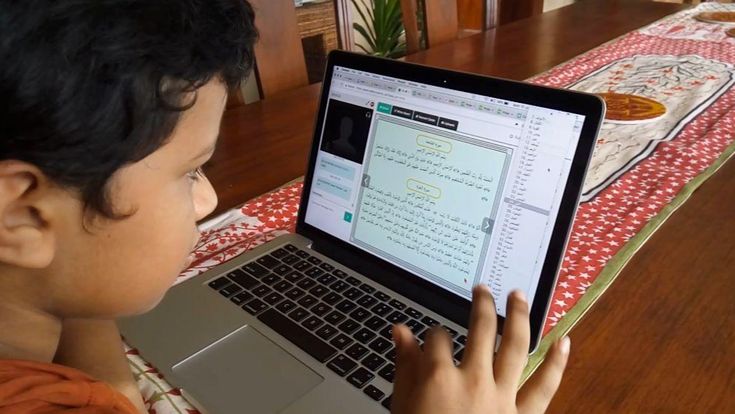
Beginners should start Tajweed classes online with the earliest skill that limits accurate recitation.
If Quran reading is unstable, strengthen letters, vowel marks, and decoding first. If the words are readable but Arabic sounds are inaccurate, begin with Makharij. Once reading and basic pronunciation are stable enough, introduce Tajweed rules gradually and apply them inside real Quranic passages.
A practical sequence is:
Reading check → Makharij → one core Tajweed pattern → live correction → guided recitation → focused practice → review
Do not judge a beginner course by how quickly it introduces advanced terminology.
Judge it by whether the learner’s recitation becomes more accurate with less help.
Do Beginners Need Strong Quran Reading Before Tajweed Classes?
Perfect Quran fluency is not required before Tajweed begins.
The important distinction is whether the main difficulty comes from reading the written word or reciting that word correctly.
A reading problem may involve:
- Confusing connected letters
- Missing vowel marks
- Guessing unfamiliar words
- Adding sounds that are not written
- Losing the correct letter order
A Tajweed problem appears when the written word is understood but the recitation still needs correction.
Examples include:
- Similar Arabic letters sounding alike
- Incorrect sound length
- A recurring Tajweed pattern being missed
- A known rule disappearing during real recitation
A learner who decodes slowly but accurately can often begin basic Tajweed while continuing to improve reading.
Someone who guesses nearly every word may need reading foundations to lead the first stage.
If basic Quran reading is still the main obstacle, use the complete roadmap to learn Quran online before increasing Tajweed complexity.
For the detailed readiness decision, continue with Quran Online With Tajweed: Do You Need Strong Quran Reading First?
What Should Beginner Tajweed Classes Check First?
The first class should identify the learner’s actual starting point instead of assuming that every beginner belongs at the same level.
| Assessment Area | What the Teacher Checks | What the Result Helps Decide |
|---|---|---|
| Quran reading | Can the learner decode unfamiliar words? | Whether reading foundations need priority |
| Letter sounds | Are similar Arabic sounds distinct? | Whether Makharij should come first |
| Basic marks | Are vowels, Sukoon, and Shaddah noticed? | Whether reading accuracy is stable |
| Short recitation | What happens inside a real passage? | Which errors repeat naturally |
| Correction response | Can the learner reproduce the model? | How much guidance is needed |
| Transfer | Can the correction appear in another word? | Whether the skill is becoming usable |
The assessment does not need to be long. A short unfamiliar sample may reveal more than a page the learner has repeated many times.
The teacher should finish by explaining:
- What is already stable
- Which problem matters most
- Why it comes first
- What will be practised
- What evidence will show readiness to move forward
Age, confidence, memorized surahs, or a previous course title can provide context, but they should not replace demonstrated recitation ability.
For a more detailed placement decision, continue with Online Tajweed Course Levels: How to Choose Your Starting Point.
What Should Beginners Learn First in Tajweed Classes?
There is no universal Tajweed rule that every beginner must study first.
The correct starting skill depends on what happens during the learner’s recitation.
Start With Makharij When Letter Sounds Are Unclear
Makharij deserves early attention when Arabic letters repeatedly lose their distinct pronunciation.
The learner may recognize the written letter but produce it from an inaccurate position or replace it with a more familiar sound.
The teacher should model the target sound, allow the learner to repeat it, place it inside a word, and then return to Quranic context.
The goal is not to memorize every articulation point immediately.
It is to correct the sound that is currently affecting recitation.
Add Core Tajweed Rules Gradually
Once reading and basic pronunciation are stable enough, Tajweed rules can be introduced in manageable groups.
These may include:
- Noon Sakinah and Tanween
- Meem-related rules
- Ghunnah
- Qalqalah
- Madd
- Heavy and light sounds
- Waqf and stopping
A beginner does not need all of these during the first lessons.
Introduce a rule when the learner is ready to:
- Recognize it
- Hear the correct model
- Apply it in a word or phrase
- Receive correction
- Try it again in another example
Once this becomes stable, another pattern can receive greater attention.
Apply Tajweed Rules in Real Quran Recitation
Knowing a rule name is not the same as applying it.
After explaining a rule, return to Quranic text.
A useful sequence is:
Teacher models → learner reads → teacher corrects → learner tries again → the same pattern appears in another example
The lesson should give the learner enough time to apply the current rule before several more rules are introduced.
What matters is whether the pattern appears correctly during recitation—not whether the learner can repeat its definition.
What Should Beginner Tajweed Classes Online Look Like?
Beginner classes should have enough structure to make the learning goal clear without turning every lesson into a rigid script.
The Australian Education Research Organisation describes explicit instruction as teaching in which skills and concepts are clearly explained, modelled, practised, and supported with feedback. Its guidance is general rather than Tajweed-specific, but those features provide a useful benchmark for beginner instruction.
Review AERO’s guidance on explicit instruction.
A beginner Tajweed lesson may include:
- Review of one previous correction
- One clear recitation target
- A teacher model
- A learner attempt
- Focused feedback
- A second attempt
- One new example
- One specific practice task
The exact lesson does not need to follow this sequence mechanically. What matters is that the learner spends enough time actually reciting and applying feedback.
A lesson becomes less useful when most of the time is spent listening to explanations while the student rarely attempts Quranic text.
How Much Tajweed Theory Should Beginners Learn Online?
A beginner needs enough theory to understand the current correction—not enough to overwhelm the recitation.
At the current stage, the learner may need to understand:
- What the rule changes
- Where it appears
- What should sound different
- Which common mistake to avoid
Long technical explanations can wait when they do not improve the next attempt.
A useful question is:
What should I notice or change when I reach this pattern in the Quran?
Once the answer becomes usable during recitation, more detail can be added.
For example, knowing the name of a Madd category is less useful if the learner still cannot hear or reproduce the basic length difference.
Theory should support performance rather than replace it.
What Does Good Tajweed Correction Look Like for Beginners?
Compare these two responses:
“Wrong. Try again.”
and:
“This letter is losing its distinct sound. Listen to the model, repeat it alone, then read the word again.”
The second response gives the learner something specific to change.
Useful correction should:
- Identify the priority mistake
- Explain what needs to change
- Give the learner another attempt
- Return to the same pattern later
For beginners, one correction that remains later is more valuable than several explanations that disappear after class.
This is also why correcting every minor issue at once can be counterproductive. The teacher should prioritize the error that matters most for the learner’s current stage.
How Should Beginners Practise Tajweed Between Online Classes?
Home practice should repeat what was corrected during the lesson.
A focused task may include:
- One letter sound
- Two difficult Quranic words
- One Tajweed pattern
- One short phrase
- One unfamiliar example using the same skill
If the lesson focused on Makharij, practise the corrected sound.
If the lesson focused on Madd, repeat that pattern in a few controlled examples.
A clear assignment might be:
Read these three words slowly, focus on the corrected sound, and then apply it in the assigned phrase.
Practice should reinforce the current lesson rather than introduce several new rules independently.
At this stage, repetition matters most when the learner is confident that the version being repeated is accurate.
Why Do Online Tajweed Classes Feel Difficult for Some Beginners?
Tajweed can feel difficult when several tasks are active at the same time.
A learner may be trying to:
- Decode the Arabic word
- Watch the vowel marks
- Produce a difficult letter
- Recall a Tajweed rule
- Maintain sound length
- Remember the latest correction
The answer is usually not more material.
Reduce the number of active targets.
If Makharij is the problem, focus on the sound. If accuracy disappears in longer passages, shorten the text. If one rule remains unclear, give it more practical examples before adding another.
A beginner course should make complex recitation manageable—not make the learner feel behind because the full syllabus has not been covered.
Common Beginner Tajweed Mistakes
1. Starting With Too Many Rules
A large syllabus may look impressive while giving the learner too many active targets to apply accurately.
2. Learning Rule Names Without Applying Them
Terminology is useful only when it supports actual Quran recitation.
3. Ignoring Basic Reading Problems
Tajweed cannot reliably correct a word that is still being decoded incorrectly.
4. Practising Incorrect Pronunciation Repeatedly
Repetition strengthens the version being practised, whether that version is accurate or inaccurate.
5. Expecting Fast Fluency
Accuracy should become more stable before the learner pushes speed.
How Do Beginners Know When to Move to the Next Tajweed Stage?
Do not use completed lessons alone.
Review three forms of evidence:
Independence
Can the learner apply the correction with less prompting?
Transfer
Can the same skill appear correctly in a different Quranic word or passage?
Retention
Does the improvement remain during a later lesson?
A beginner does not need perfect performance before moving forward.
Earlier skills can continue to receive review while a new rule is introduced.
A better sign of readiness is that the learner can use the current correction beyond the exact word or passage in which it was first taught.
Use this decision:
Move forward when the learner can use the current skill beyond the original exercise—not simply when the rule has been explained.
How to Choose Tajweed Classes Online for a Beginner
When comparing Tajweed classes online for a beginner, check whether the course begins with your actual recitation rather than a fixed rule list.
A useful first lesson should:
- Listen to an unfamiliar sample
- Identify the earliest unstable skill
- Explain why it comes first
- Demonstrate one relevant correction
- Give you another attempt
- Assign focused practice
- Explain what will be reviewed next
The strongest beginner class is not necessarily the one advertising the largest syllabus.
Look for evidence that the teacher can diagnose your starting point and adapt the lesson accordingly.
Before choosing regular instruction, use Qibla Academy’s teacher profiles to compare Quran and Tajweed teaching backgrounds.
Compare Qibla Academy’s Quran Teachers
For the broader commercial evaluation process, continue with Online Tajweed Classes.
Frequently Asked Questions
1. Are Tajweed Classes Online Suitable for Complete Beginners?
Yes. A complete beginner can start online, but the first lessons may need to strengthen Quran-reading foundations or Arabic-letter pronunciation before several Tajweed rules are introduced.
2. What Should I Learn First in Tajweed?
Start with the earliest skill limiting accurate recitation. This may be Quran reading, Makharij, or one basic Tajweed pattern rather than a fixed rule for every learner.
3. Do I Need to Know Arabic Before Learning Tajweed?
You do not need conversational Arabic. However, enough Arabic-script reading ability is needed to work with the Quranic text at your current stage.
4. How Many Tajweed Rules Should a Beginner Learn at Once?
There is no fixed number. Work with a manageable rule or rule group that can be recognized, practised, and applied without overwhelming the recitation.
5. How Do I Know if My Beginner Tajweed Classes Are Working?
Look for clearer pronunciation, fewer repeated prompts, better application in unfamiliar words, retained corrections, and a clear explanation of what should be learned next.
Conclusion: Start Tajweed Classes Online at the Right Level
Tajweed classes online for beginners should begin with the skill that currently limits accurate recitation.
If Quranic words are still being guessed, strengthen reading foundations. If the text is readable but particular Arabic sounds remain unclear, begin with Makharij. Once reading and pronunciation are stable enough, introduce Tajweed rules gradually and apply them in real Quranic passages.
Do not measure a beginner course by how many rules are introduced.
Look for clearer recitation, useful correction, enough learner reading time, focused home practice, and evidence that the same improvement appears later.
Use this decision rule:
Fix reading when decoding is the problem. Focus on Makharij when letter sounds are unclear. Add Tajweed rules when the learner can recognize and apply them during real Quran recitation.
The right first step is the one that makes the next recitation more accurate—not the one that makes the syllabus look more advanced.
Continue Your Beginner Tajweed Journey
1. Need the Full Tajweed Roadmap?
Continue with Learn Quran Tajweed Online: A Step-by-Step Beginner Roadmap.
Choose this guide when you want to understand how reading foundations, Makharij, Tajweed rules, practice, and progress fit together beyond the beginner starting decision.
2. Not Sure Whether Your Quran Reading Is Ready?
Read Quran Online With Tajweed: Do You Need Strong Quran Reading First?
This is the better next step when decoding, vowel marks, or basic Quran reading may still be limiting your Tajweed progress.
3. Ready to Compare Live Tajweed Classes?
Continue with Online Tajweed Classes.
Use this guide to compare starting assessments, live correction, course structure, teachers, pricing, practice expectations, and trial options before enrolling.
Prefer to Check Your Level First?
You do not need to decide whether reading, Makharij, or Tajweed rules should come first on your own.
Read a short unfamiliar Quranic passage, receive live correction, and ask which skill currently limits your recitation.