Online Tajweed Classes With Live Quran Teachers
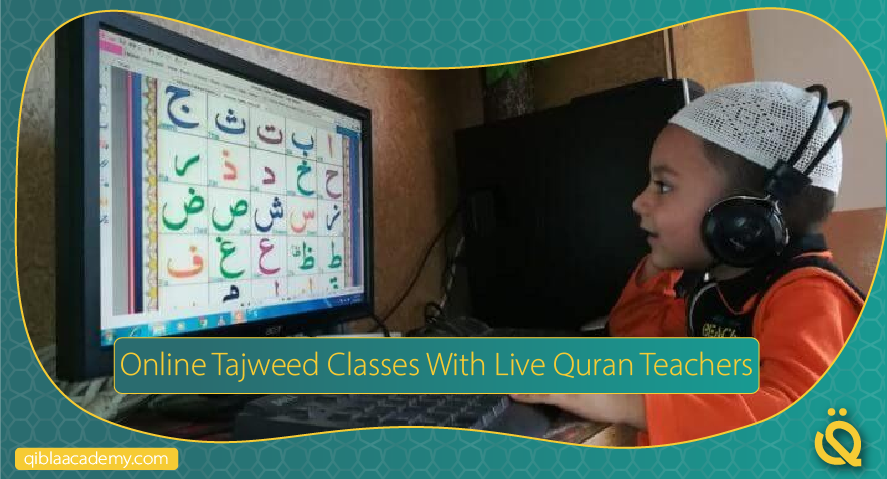
Online Tajweed Classes should do more than explain Tajweed rules on a screen.
A useful class should listen to your actual recitation, identify the mistake that matters now, demonstrate the correction, let you try again, and check whether you can apply the same skill in another Quranic word or passage.
That distinction matters.
You may already understand terms such as Madd, Ghunnah, Qalqalah, or Makharij but still struggle to apply them during real recitation. Another learner may believe Tajweed is the main problem when the real difficulty is basic Quran reading or inaccurate letter pronunciation.
For the complete educational journey, review Learn Quran Tajweed Online: A Step-by-Step Beginner Roadmap.
This page focuses on the commercial decision:
What should Online Tajweed Classes include, who are they suitable for, and what evidence should you check before enrolling?
Quick Answer: What Are Online Tajweed Classes?
Online Tajweed Classes are structured Quran lessons that combine live recitation, pronunciation work, Makharij, applied Tajweed rules, guided practice, and individual teacher correction.
A strong class should follow this cycle:
Assess → identify one priority → model → learner recites → correct → learner tries again → apply in context → review later
If you already read Quran but repeatedly make pronunciation or Tajweed mistakes, live correction may be the main support you need.
If basic reading itself remains unstable, the teacher should identify that first rather than introducing advanced Tajweed rules too early.
Who Are Online Tajweed Classes Best For?
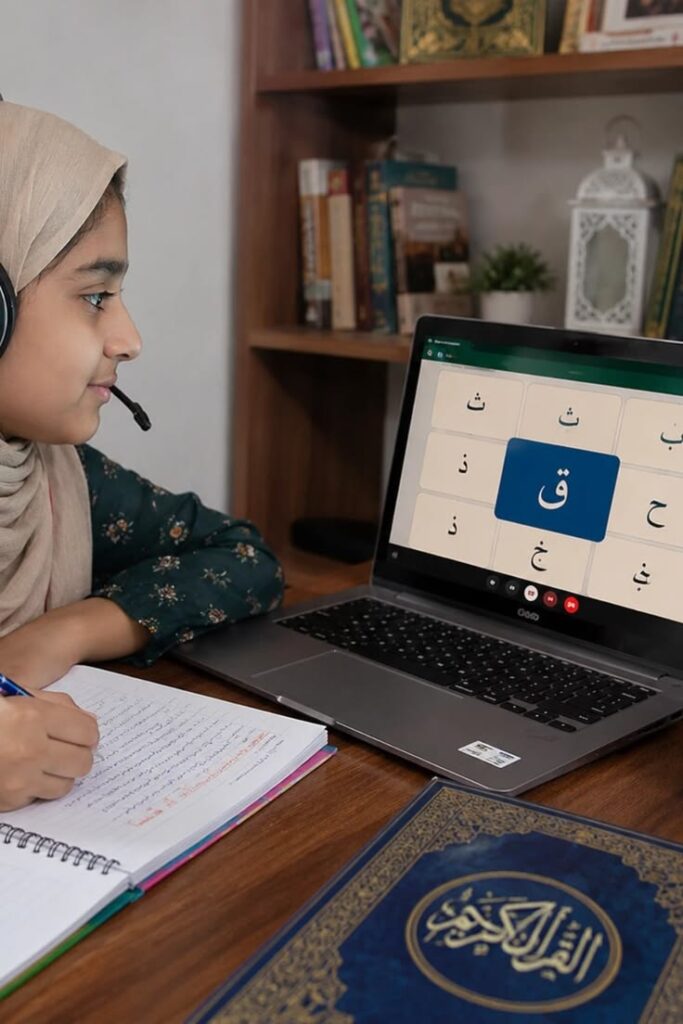
Different learners enter Tajweed classes at different stages.
You may benefit from guided Tajweed lessons when you:
- Can read Quran but want more accurate pronunciation
- Confuse similar Arabic sounds
- Understand rules but struggle to apply them
- Repeat the same recitation mistakes
- Want personal feedback while reading Quran
- Are returning to Quran after a long break
- Need help with Makharij
- Want to improve fluency without losing accuracy
- Are memorizing Quran and want correction before repetition
- Cannot confidently evaluate your own recitation
Complete beginners may also join an online Tajweed course, but the first stage may involve Quran-reading foundations rather than advanced rules.
The useful question is not:
Am I advanced enough for Tajweed?
Ask instead:
Which reading or pronunciation skill is currently preventing accurate recitation?
Beginners who want a dedicated starting framework can continue with Tajweed Classes Online for Beginners: What Should You Learn First?
What Should Online Tajweed Classes Include?
| Course Element | What Should Happen | Evidence to Look For |
|---|---|---|
| Starting assessment | Learner reads unfamiliar material | Teacher identifies the actual level |
| Makharij correction | Difficult letter sounds are checked | Correction targets the learner’s pronunciation |
| Applied Tajweed | Rules appear inside Quranic reading | Theory is connected to recitation |
| Teacher modelling | Correct form is demonstrated | Learner can hear what should change |
| Learner attempt | Student recites independently | Real difficulties become visible |
| Focused feedback | Priority mistake is explained | Feedback is specific and usable |
| Second attempt | Learner applies the correction | Immediate understanding is tested |
| Practice task | One relevant task is assigned | Practice connects to the lesson |
| Later review | Earlier correction is revisited | Retention is checked |
| Progress decision | Next stage is explained | Advancement has a reason |
A long Tajweed syllabus does not automatically make a course better.
The important question is whether the learner can apply what is being taught during actual Quran recitation.
A course that introduces many rule names but provides little recitation time may create theoretical knowledge without solving the learner’s actual pronunciation problems.
Reading, Makharij, Tajweed, or Fluency: What Should Come First?
One of the most important functions of Tajweed classes online is identifying the correct starting point.
Start With Quran Reading Foundations When…
Letters, joined forms, vowel marks, or unfamiliar words still require frequent guessing.
Advanced Tajweed terminology will not solve a decoding problem.
Focus on Makharij When…
The written word is recognized correctly, but certain Arabic letters repeatedly sound inaccurate or too similar.
The priority is correcting the sound itself before adding several new rules.
Focus on Applied Tajweed When…
Reading is reasonably stable, but rules involving lengthening, nasalisation, stopping, or other recurring recitation patterns are not applied consistently.
Focus on Fluency When…
The learner reads accurately but pauses excessively, loses flow, or becomes less accurate in longer passages.
Fluency practice should not mean increasing speed while mistakes remain.
Use this decision rule:
Correct the earliest skill that affects the recitation, then build the next layer on top of it.
Learners who are unsure whether reading or Tajweed should come first can continue with Quran Online With Tajweed: Do You Need Strong Quran Reading First?
How Does Live Tajweed Correction Work?
The main advantage of live instruction is not simply hearing a teacher.
It is giving the teacher an opportunity to respond to your own recitation.
Useful correction may follow this process:
You recite → teacher identifies one priority error → teacher models it → you repeat → you read the word again → you apply it inside the passage → the teacher reviews it later
A weak correction ends with:
“That is wrong.”
Stronger correction answers:
- Which sound or rule was inaccurate?
- What did you produce?
- What should change?
- Can you hear the difference?
- Can you repeat it?
- Can you apply the correction again without immediate prompting?
General teaching research also supports the value of actionable feedback. The UK-based Education Endowment Foundation recommends feedback that builds on appropriate foundations and helps learners close the gap between current and intended performance. Its guidance is not specific to Tajweed, but the principle is relevant here: correction should lead to a clear next action.
Read the EEF guidance on teacher feedback.
In a Tajweed lesson, that next action should usually be another recitation attempt.
Without another attempt, neither the learner nor the teacher can confirm that the correction was understood.
What Should an Online Tajweed Course Teach?
A complete online Tajweed course may cover several areas, but they should be introduced according to learner readiness rather than treated as one checklist that everyone begins at the same point.
Common areas include:
- Quran-reading accuracy
- Makharij
- Sifaat
- Noon Sakinah and Tanween
- Meem rules
- Ghunnah
- Qalqalah
- Madd
- Heavy and light pronunciation
- Waqf
- Applied recitation
- Fluency
This page does not teach these rules individually.
Their purpose here is to help you understand what an online Tajweed course may contain and how those elements should fit into a learning sequence.
The wider rule structure will be covered in Learn Quran Tajweed Online: How the Core Tajweed Rules Fit Together.
Learners who want to see how major rules are applied inside a course can continue with Online Tajweed Course: How Madd, Ghunnah, Qalqalah, and Waqf Are Taught.
A student should not be required to memorize every Tajweed term before reading real Quranic passages.
Rules become useful when they are recognized and applied during recitation.
Live Classes or Recorded Tajweed Lessons?
Recorded material can be useful for:
- Reviewing explanations
- Listening to examples
- Revising terminology
- Repeating a familiar rule
- Preparing before a live class
Live instruction becomes more useful when the learner needs:
- Individual assessment
- Pronunciation correction
- Makharij feedback
- Error diagnosis
- Adaptation of pace
- Confirmation that a rule is being applied correctly
- A decision about the next learning stage
The formats do not have to compete. A learner may review explanations independently and use live class time for recitation, correction, and individual feedback.
For the full comparison, continue with Online Tajweed Classes vs Recorded Tajweed Courses: Which Works Better?
What Should You Check Before Choosing Tajweed Classes Online?
A commercial course page may use phrases such as “expert teachers,” “personalized lessons,” “complete Tajweed course,” or “beginner-friendly.”
Those labels are useful only when the teaching process provides evidence behind them.
Check the Starting Assessment
Will you actually recite unfamiliar Quranic material before a course level is recommended?
Your placement should reflect demonstrated ability rather than age, confidence, or a previous course title.
Check Your Recitation Time
Ask how much of the live lesson involves you reciting.
A Tajweed lesson should not consist mainly of listening to explanations while the teacher performs most of the Quran reading.
The learner needs enough time to attempt, make mistakes, receive feedback, and try again.
Check the Correction Process
Find out what happens after a mistake.
Does the teacher merely provide the correct answer, or do they:
- Identify the error
- Demonstrate the correct form
- Let you repeat it
- Return to the Quranic word
- Check the same skill later
The second process produces more useful evidence.
Check the Learning Sequence
A good Tajweed programme should explain what comes next and why.
Ask:
- Which skill am I working on now?
- Why does it come before another rule?
- Which prerequisite needs to be stable?
- What evidence will show that I can move forward?
The existence of a curriculum document is less important than whether the learning sequence matches your recitation.
Check Home Practice
Between-lesson practice should reinforce live correction.
A useful assignment identifies:
- The word or passage
- The specific sound or rule
- What to repeat
- Whether an unfamiliar example is included
- What will be checked next
“Practise Tajweed before the next lesson” is too broad.
Check Progress Reviews
Ask how improvement will be recognised.
Useful evidence may include:
- Less teacher prompting
- More accurate pronunciation
- Better application in unfamiliar passages
- Retained correction
- Improved control during longer recitation
Progress should not mean only completing more pages or memorizing more rule names.
Check the Teacher
The teacher should have a relevant Quran and Tajweed teaching background and be able to explain correction in a way you can apply.
Use Qibla Academy’s Quran Teachers to compare relevant Quran and Tajweed teaching backgrounds before choosing regular lessons.
A dedicated evaluation framework will be available in Online Tajweed Classes: How to Choose the Right Tajweed Teacher.
What Should You Check About Pricing?
Price should be considered together with the actual teaching process.
Compare:
- Lesson duration
- Number of monthly classes
- One-to-one or group format
- Teacher consistency
- Live correction time
- Practice expectations
- Rescheduling policies
- Trial availability
- Progress support
The lowest monthly price is not automatically the best value.
Likewise, a higher price does not prove better teaching.
Ask:
What correction, recitation time, and learning support am I receiving for the price?
For current lesson plans, class frequency, and pricing information, review the Current Class Plans page before enrolling.
What Should Happen During a Tajweed Trial Lesson?
A trial should help you evaluate the teaching process before committing to regular classes.
A useful trial may include:
- A short discussion of your goal
- An unfamiliar Quran reading sample
- Identification of the priority difficulty
- Teacher modelling and correction
- A second recitation attempt
- A starting-level recommendation
- One practice task
- A clear next step
After the trial, you should be able to answer:
- What should I fix first?
- How does the teacher correct me?
- Did I receive enough recitation time?
- What should I practise?
- What will be reviewed next?
For a dedicated pre-enrollment checklist, continue with Online Tajweed Classes With a Free Trial: What to Check Before Enrolling.
How Qibla Academy Can Support Tajweed Learning
Qibla Academy offers online Quran instruction that can be evaluated according to the same criteria in this guide: starting-level fit, live recitation, correction quality, practice expectations, and teacher suitability.
During a trial lesson, determine whether your current priority is:
- Quran-reading foundations
- Makharij correction
- Applied Tajweed
- Guided recitation
- Fluency
Then ask the teacher to explain:
- Which skill should come first
- Why it is the priority
- Which material will be used
- What you should practise
- How correction will be reviewed
- When the learning stage may change
The recommendation should be based on your recitation rather than the course name alone.
Parents looking specifically for a child-focused pathway can review Online Quran Classes With Tajweed for Kids: A Parent’s Guide.
Stay Connected With Qibla Academy
Follow Qibla Academy for Quran-learning resources, class updates, and new educational guides.
Try the Teaching Process Before Committing
Read a short Quranic passage, receive live correction, and ask which Tajweed skill should come first.
Frequently Asked Questions
1. What Are Online Tajweed Classes?
Online Tajweed Classes are structured Quran lessons that combine recitation with pronunciation work, Makharij, applied Tajweed rules, teacher correction, and guided practice.
2. Do I Need to Read Quran Before Starting Tajweed Classes?
You do not need perfect fluency. However, if letters, vowel marks, or word decoding remain unstable, those foundations may need to lead the first stage.
3. Are Online Tajweed Classes Suitable for Beginners?
Yes, when the programme begins at the learner’s demonstrated level rather than assuming that every beginner is ready for advanced Tajweed rules.
4. Can I Learn Tajweed From Recorded Lessons?
Recorded lessons can explain and review Tajweed rules. Live guidance becomes more useful when you need pronunciation assessment, Makharij correction, or feedback on your own recitation.
5. How Do I Know Whether Online Tajweed Classes Are Working?
Look for more accurate recitation, less prompting, better application of correction in unfamiliar passages, retained feedback, and a clear explanation of the next learning priority.
Conclusion: Choose Online Tajweed Classes That Correct Your Recitation
Online Tajweed Classes should be evaluated by what happens during your own recitation, not by how many Tajweed rules appear on the course page.
A useful programme should assess your current reading, identify the priority difficulty, provide a clear model, allow you to attempt the correction, and check whether you can apply it again in Quranic context.
Before enrolling, confirm that:
- You receive a real starting assessment
- The teacher listens to your recitation
- You have enough time to read during the lesson
- Correction leads to another attempt
- Home practice connects to the lesson
- Previous corrections are reviewed
- Pricing and policies are clear
- The teacher and schedule suit your needs
Use this decision rule:
Choose reading foundations when decoding is unstable. Focus on Makharij when letter sounds are the main problem. Use applied Tajweed when reading is stable but rules remain inconsistent. Choose regular live correction when you cannot reliably identify or correct your own recitation errors.
The best online Tajweed course is not necessarily the one with the longest syllabus. It is the one that helps you apply the right correction accurately in real Quran recitation.